
Whiplash Treatment in Leesburg, VA
A thorough soft-tissue evaluation for the neck pain, stiffness, and headaches that often don't show up until a day or two after the crash.

Car Accidents and Whiplash Risk in Leesburg
Leesburg's location where Route 7 and Route 15 cross creates constant congestion and stop-and-go traffic that raises the risk of rear-end collisions. Winter ice events add another layer of danger, and even low-speed fender-benders can cause whiplash that patients dismiss until pain and stiffness worsen days later.
Leesburg sits at one of Loudoun County's busiest crossroads. Two major highways meet here, funneling commuter traffic toward the Dulles corridor, Northern Virginia, and Winchester. During peak commuting hours, this intersection and areas like Battlefield Parkway and King Street see dense, slow-moving traffic. This leads to sudden stops, a common cause of rear-end collisions and whiplash injuries.
Seasonal weather adds to the risk. Leesburg winters bring ice storms and freezing overnight temperatures. Roads stay slick into the morning commute, especially on bridges and shaded stretches near the Route 7 bypass. Icy conditions increase stopping distances and reduce traction. This causes a seasonal increase in rear-end and multi-car collisions reported by local emergency rooms and urgent care clinics. Common incidents are:
- Rear-end collisions at stoplights along the Route 7 and Route 15 corridor
- Low-speed fender-benders in parking lots and shopping center exits
- Sudden braking incidents on icy or wet roads during winter months
- Multi-vehicle pileups during rush hour congestion near major interchanges
One misunderstood part of whiplash is how little force causes an injury. Many patients in minor fender-benders assume little vehicle damage means little risk to their neck or back. Whiplash can occur at speeds as low as five to ten miles per hour. The sudden forward-and-back motion of the head and neck happens no matter how much the car is damaged. This difference between vehicle damage and physical impact often causes whiplash symptoms to be downplayed or ignored after an accident in the Leesburg area.
Trusted chiropractic care, Leesburg VA.A Clear CT Scan Doesn't Mean You're in the Clear
It's a common story we hear from patients after a fender-bender on the Leesburg Bypass or a rear-end collision near the busy Route 7 and Route 15 interchange. They take an ambulance ride or drive themselves to a local emergency room. They get a CT scan or X-ray, and the discharge summary reads 'no acute findings.' The ER doctor hands over a muscle relaxant prescription. The patient is told to follow up with their primary care provider if symptoms persist, and then sent home. No physical therapy referral. No chiropractic evaluation. No imaging of the soft tissues at all.
That clean scan feels like good news, and in one sense it is. It means there's no broken vertebra, no skull fracture, no life-threatening bleeding. But CT scans and standard X-rays are built to find bone injuries and internal bleeding. They do not evaluate the ligaments, tendons, and small joint capsules of the neck that whiplash damages. A scan can be completely normal while the cervical spine has significant ligament laxity, muscle fiber tearing, or facet joint irritation underneath.
- Cervical ligament sprains and micro-tears rarely show up on CT or X-ray
- Disc bulges and early degenerative changes often require MRI to detect
- Muscle strain and spasm are functional injuries, not structural ones a scan can flag
- Nerve root irritation and referred arm or hand symptoms are frequently missed on standard imaging
- Jaw and TMJ involvement from the whiplash motion is almost never screened for in the ER
According to Mayo Clinic, whiplash symptoms often peak 24 to 72 hours after the collision.[1] This means a patient examined in the ER an hour after impact may feel fine. Two mornings later, they might wake up with a stiff, locked neck, headaches, or tingling down one arm. By that point, the ER visit is closed, and there's no system prompting a return visit.
A normal CT scan confirms your bones are intact. It says nothing about whether your neck's soft tissue has been injured. The real question isn't whether you were cleared at the ER. It's whether anyone has evaluated the soft tissue since then.
Signs You Need Whiplash Treatment Now vs. Can Wait
Not every sore neck needs a same-day call. But some do, and knowing the difference matters. We see this every week — someone waited two weeks hoping it would fade. Watch for these signs that mean you shouldn't wait:
- Pain that spreads into your shoulders, upper back, or down your arm
- Headaches that start at the base of your skull and creep forward
- Stiffness so bad you can't check your blind spot while driving
- Dizziness, ringing ears, or trouble focusing your eyes
- Numbness or tingling in your hands or fingers
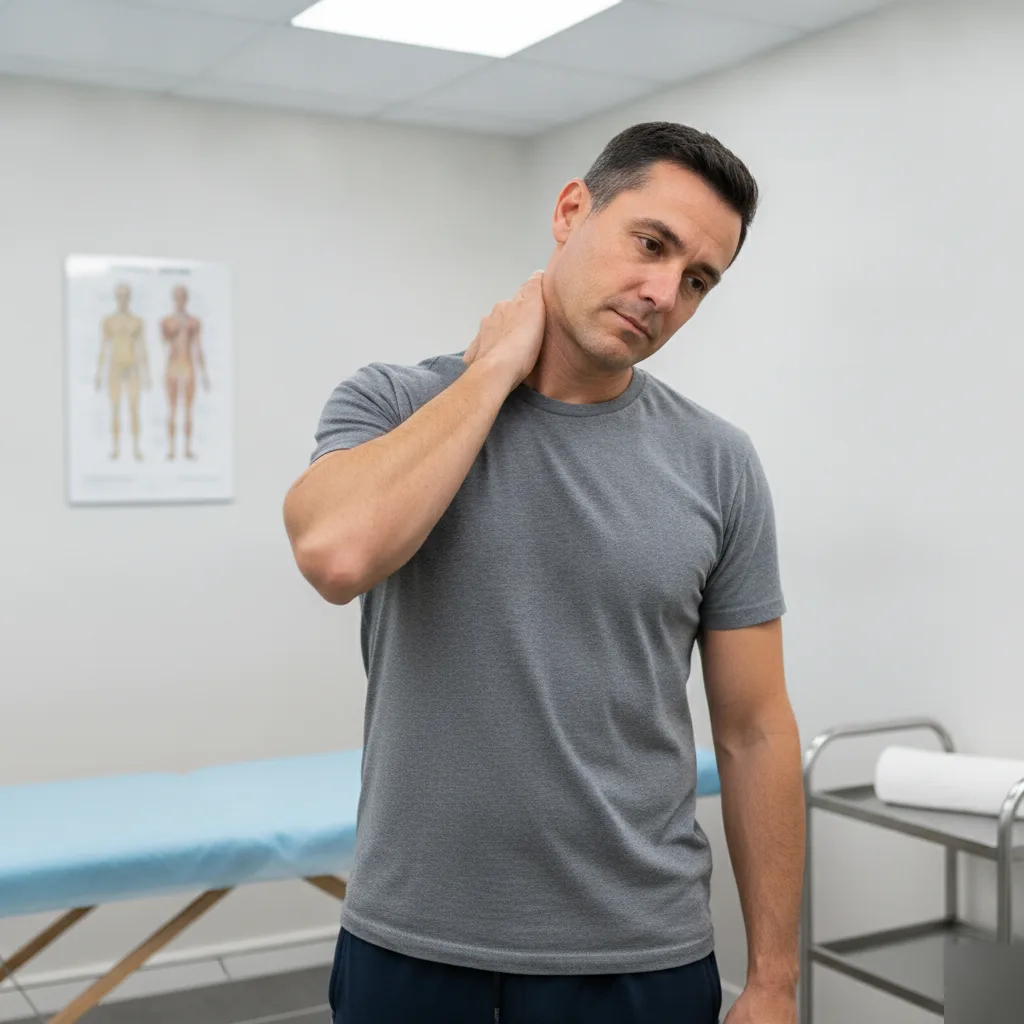
If you have any of those symptoms, call us. Don't wait for it to feel unbearable. Whiplash rarely announces itself with dramatic pain right away.
Now, if you have mild stiffness that showed up the day after a fender-bender and it's easing a little each day, that's a different story. Some soft tissue soreness settles on its own within a few days with rest, ice, and gentle movement. Give it 48 to 72 hours. If it's not improving, or if it's getting worse, that's your signal to stop waiting.
Whiplash is sneaky. Adrenaline from the accident can mask pain for a day or two, so feeling fine right after a crash doesn't rule out injury. People who put off whiplash treatment for weeks end up dealing with tightness and headaches that stick around longer than they should.
What Happens During Whiplash Care and Recovery
Whiplash care in Leesburg typically starts with a detailed conversation about the accident. Your provider will ask how the collision happened, the direction of impact, whether your headrest was properly positioned, and how soon symptoms appeared. This history matters because rear-end collisions on Route 15 or sudden stops on the Leesburg Bypass create different injury patterns than a side-impact fender bender near the Village at Leesburg.
Next comes a physical exam focused on your neck's range of motion, muscle tightness, and any pain that radiates into the shoulders, arms, or upper back. The clinician checks for referred pain patterns, tenderness along the cervical spine, and signs of nerve irritation. If red flags are present — such as numbness, severe weakness, or symptoms following a high-speed impact — imaging like X-rays or an MRI may be discussed to rule out fractures or disc involvement before hands-on care begins.
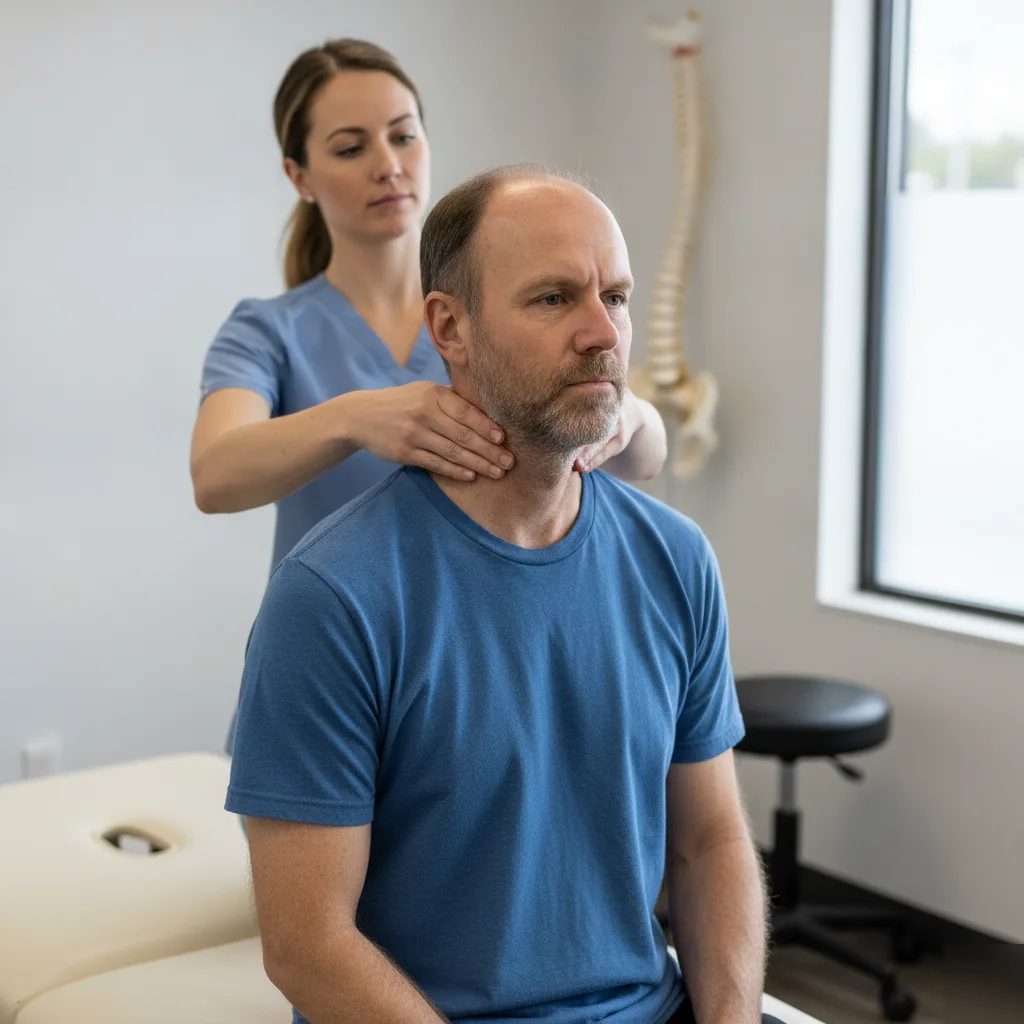
Once the exam is complete, your provider builds an individualized plan rather than a one-size-fits-all protocol. This usually blends several approaches tailored to your specific injury and daily demands, whether you commute into D.C. for work or spend your day on your feet:
- Gentle spinal adjustments to restore joint motion and reduce stiffness in the neck and upper back
- Soft-tissue therapy to release tight muscles and reduce inflammation around the cervical spine
- Guided stretching and strengthening exercises to rebuild stability and prevent future flare-ups
- Posture and ergonomic coaching for desk work, driving, or physical labor
- Periodic reassessment to track range-of-motion improvements and adjust the plan
It's common to feel mild soreness after the first one or two sessions, similar to the feeling after a new workout. This is especially true if muscles have been guarding the injury for days or weeks. This typically fades quickly as the tissues respond to care. Recovery is rarely a straight line. Most patients notice gradual improvement over several weeks. Reassessments every few visits measure progress in motion, pain levels, and daily function. Consistency between visits, including at-home stretches and activity modifications, plays a major role in how quickly Leesburg patients return to normal routines like yard work, gym sessions, or long commutes.
Whiplash treatment after Leesburg crashes.Documentation, Insurance, and What Whiplash Treatment Costs
If your whiplash came from a car crash, paperwork matters as much as the exam. We document your visit, your range of motion, and your pain levels from day one. That record is what your insurance company or attorney will ask for later.
We offer auto injury chiropractic care and personal injury chiropractic care for exactly this reason. The care and the documentation happen under one roof.
Cost in this industry usually comes down to a few things — and it's rarely just one visit:
- How many visits your neck and shoulders need to calm down and move normally again
- Whether spinal decompression or roller table therapy gets added alongside adjustments
- How soon after the crash you started care; early care often needs less overall work
- Whether your case involves an insurance claim that requires extra reports or check-ins
A mild case with quick care costs less than one that sat untreated for weeks. That's just how it works.
Ask any provider you're considering how they bill, whether they work with your insurance, and how they estimate the number of visits you'll need. A straight answer to that question tells you a lot.
We don't quote prices over the phone before we've seen your neck move.
Frequently Asked Questions
Common questions from Leesburg patients about whiplash treatment.
What should I bring to my first whiplash appointment?
Bring any paperwork from your ER visit or urgent care, including scan results and discharge notes. This helps us see what's already been ruled out. Also bring your insurance card and a list of your symptoms, even ones that feel minor. Write down when pain started and what makes it better or worse. If you were in a crash near Route 7 or Route 15, note the date and time. This speeds up your first visit and helps us build a clear treatment plan.
How long does it take to recover from whiplash?
Most people start feeling real improvement within a few weeks of starting care, though timelines vary by injury severity. Mild cases with early treatment often ease up faster than cases where someone waited weeks to get checked. We've seen patients who delayed care end up with tighter muscles that take longer to loosen. Getting evaluated soon after your accident, ideally within the first few days, gives you the best shot at a quicker, smoother recovery.
Do I still need chiropractic care if my ER scan came back clear?
Yes, a clear CT scan or X-ray only rules out broken bones and internal bleeding. It doesn't check the ligaments, muscles, and small joints in your neck that whiplash damages. Many patients leave the ER with a normal scan and no referral for soft tissue evaluation. If you were in a fender-bender on the Leesburg Bypass or near the Route 7 and Route 15 interchange, a follow-up exam can catch injuries the ER scan missed entirely.
How soon after a car accident should I get whiplash treatment?
Call within 48 to 72 hours if your symptoms aren't easing up, especially after collisions common at Leesburg's busy intersections and stoplights. Adrenaline can mask pain for a day or two, so feeling okay right after impact doesn't mean you're in the clear. Mild stiffness that improves daily with rest and ice can wait a few days. But headaches, arm tingling, or worsening neck stiffness mean you shouldn't wait any longer to get checked.
Can a low-speed fender-bender in a Leesburg parking lot really cause whiplash?
Yes, whiplash can happen at speeds as low as five to ten miles an hour, no matter how little damage your car shows. The sudden forward-and-back snap of your head and neck causes the injury, not the size of the dent. This is why parking lot fender-benders around Leesburg shopping centers are just as capable of causing whiplash as a highway collision. Don't judge your injury risk by how your bumper looks after the crash.
Does icy weather in Leesburg increase my risk of whiplash injuries?
Yes, winter ice on bridges and shaded stretches near the Route 7 bypass increases stopping distances and causes more rear-end collisions each year. Local emergency rooms report a seasonal jump in these crashes when roads stay slick into the morning commute. If you're rear-ended during icy conditions, treat it the same as any other collision. Get your neck evaluated even if the impact felt minor, since ice-related crashes cause the same whiplash motion as any other rear-end hit.
Source
[1] Mayo Clinic. mayoclinic.org/diseases-conditions/whiplash/symptoms-causes/syc-20378921