
Back Pain Treatment in Leesburg, VA
Root-cause care for desk-job stiffness, lifting strain, pregnancy and postpartum back pain, and old injuries that never fully settled.
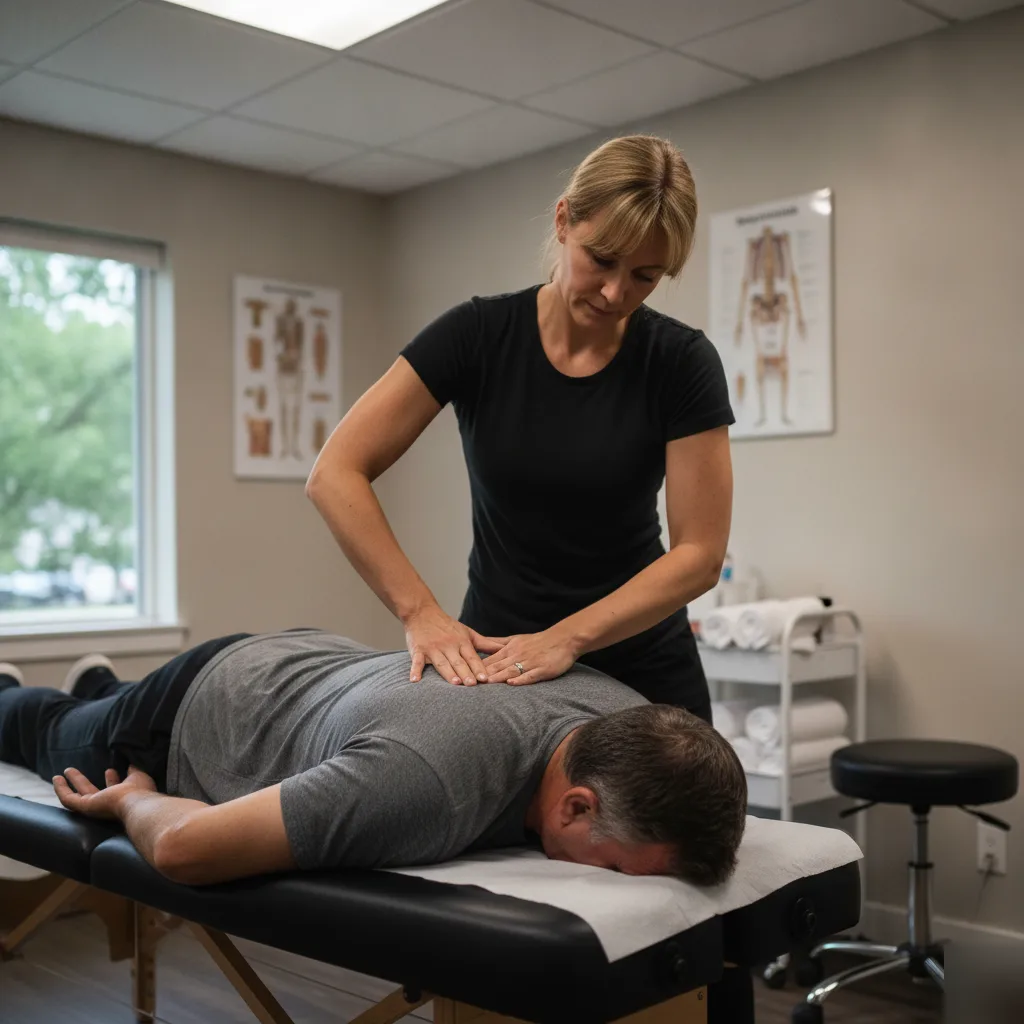
Common Causes of Back Pain in Everyday Life
Back pain usually builds up over time from posture, repeated movement, or an old injury that never fully healed, not from one single event. Sitting at a desk all day, lifting kids or car seats wrong, or standing on hard floors for hours all put steady strain on your spine. Finding the root cause matters more than just chasing the pain.
Back pain isn't from one dramatic moment. It's from the slow stuff. We see it every week here in Leesburg: people who work remote jobs and sit for hours at a kitchen table that was never meant to be a desk. That posture adds up, and so does the drive out Route 15 during commute traffic, hunched forward, shoulders tight, spine locked in one position for too long.
Parents get a different version of this. Lifting a car seat out of the back of an SUV, carrying a toddler on one hip, or bending over a crib to settle a baby at 2 a.m., these small repeated movements strain the lower back and hips more than most people realize. Expecting mothers especially deal with this after pregnancy, when the joints and ligaments are still loosening back into place.
Old injuries play a role too. A fall from years ago, a sports injury that never got properly checked, a fender bender that left some stiffness behind. That stuff doesn't just disappear. It sits there, quietly changing how your spine moves, until one day bending to tie your shoe sets it off.
Not sure which one sounds like you? That's common. Most people can't pinpoint the exact cause on their own, and that's fine, that's what we're here for.
Back Pain That Needs Professional Care Versus Pain That Doesn't
Not every backache means you need to call us. If you tweak your back lifting a laundry basket and feel better in two days? That's normal. Your body heals plenty of small strains on its own.
So how do you tell the difference? We think about it in terms of pattern, not just pain level.
- Pain that fades within a few days and doesn't come back with normal movement
- Soreness only after unusual activity, like yard work or a long drive on Route 15
- No numbness, tingling, or weakness anywhere in your legs or feet
- You can still stand up straight and walk without favoring one side
If that describes you, rest and gentle movement are probably enough. Give it a week.
Now here's when it's a different story. Pain that keeps returning, gets worse over weeks, or shoots down into your leg is telling you something structural is going on. So is back pain that showed up after a car accident on Battlefield Parkway, even a minor one. We see this every week, someone waited three months hoping it would just go away, and by then the muscles around the spine have tightened up to protect it, which makes everything stiffer and harder to treat.
According to the Mayo Clinic, symptoms of numbness in your foot, weakness when you try to stand on your toes, or pain that wakes you up at night may be signals your body isn't managing this alone anymore.[1]
Not sure which camp you're in? That's common, and it's a fair question to bring to us instead of guessing.
New Energy Chiropractic has the answers to your questions.Back Pain Unique to Pregnancy and New Parenthood
Pregnancy back pain isn't the same animal as a sore lower back from moving furniture. Your center of gravity shifts forward, your ligaments loosen up from hormone changes, and your posture changes week by week whether you want it to or not. That's a moving target, and it needs a tailored care plan that moves with it.
We see this every week: a mom comes in at 28 weeks with pain along her lower back and hip, sometimes shooting down one leg. It's often related to pelvic alignment, not something structural or scary. According to the International Chiropractic Pediatric Association, that's where Webster technique and prenatal chiropractic care come in; these are built around pregnant bodies specifically, not just a regular adjustment done more gently.[2]

Then there's the postpartum side, which people forget about until it hits them. You're bent over a crib, nursing at odd angles, carrying a car seat on one hip. Your core hasn't recovered, but your daily lifting just went way up. That combination is why so many new moms end up with back pain that feels different from anything they had before; it's mechanical, it's repetitive, and it responds well to hands-on care and posture work.
- Pelvic and lower back pain that changes as pregnancy progresses
- Sciatic-type pain down one leg from shifting alignment
- Upper back and neck tightness from nursing or bottle feeding posture
- Hip pain from carrying a baby or car seat on one side
This is a big part of why New Energy Chiropractic exists: care built around moms, babies, and thriving families, led by two female doctors who work through these exact patterns daily.
What Happens During a Back Pain Evaluation and Treatment Plan
So what happens when you come in? First visit, we're not just asking where it hurts and handing you a heat pack. We sit down and go through your history: when the pain started, what makes it worse, whether it's sharp or dull, and whether it moves down your leg. That last one matters a lot; it can point us toward sciatica instead of a plain muscle strain.
Then we move into a physical exam. We check your posture, your range of motion, and how your spine moves segment by segment. We're feeling for restrictions, checking which joints aren't moving the way they should. Often, the spot that hurts isn't the actual problem; it's just where the stress ends up showing itself. A hip that isn't moving right can throw off your whole lower back for months before you ever feel a thing there.

From there we build a tailored care plan specific to you. That might mean gentle adjustments to restore mobility in the joints that are stuck, roller table therapy to work on the surrounding muscle tension, or spinal decompression if we're dealing with disc involvement. If you're pregnant, Webster technique comes into play instead, since standard adjustments aren't the right approach there.
We'll also talk about the timeline with you.
Some folks feel looser after the first visit. Most people need a handful of visits before the change really holds, and we'll tell you what to expect for your specific case rather than giving you a one-size answer. You leave that first appointment knowing exactly what we found and what we're doing about it, not just with an appointment card for next week and no explanation.
How Chiropractic Pricing and Insurance Typically Work
Let's talk about money, because we know that's usually the next question. Chiropractic care generally gets billed one of two ways: per visit, or as part of a care plan built around your specific issue. A first visit almost always costs more than follow-ups, since it includes a consultation and exam to figure out what's going on with your back.
Insurance coverage for back pain treatment varies a lot. Some plans cover chiropractic visits like any other specialist. Others need a referral first, or only cover a set number of visits per year. And some plans don't touch chiropractic care at all. There's no way around it, you've got to check your specific plan.
What drives your cost isn't really the clinic, it's your case. A straightforward muscle strain resolves faster than a herniated disc that's been aggravating your sciatic nerve for months. More visits means more cost, plain and simple. But it also means your body needs more time to heal, not just feel better for a day.
- Ask whether your plan requires a referral before your first visit
- Ask how many chiropractic visits your plan covers per year
- Ask if your deductible has already been met for the year
- Ask whether an exam or X-ray is billed separately from the adjustment itself
We'll never quote you a number before we've seen what's going on with your spine. Anyone who does that is guessing. Once we know whether we're dealing with sciatica, a herniated disc, or general lower back pain, we can talk through a plan that fits your situation and your coverage.
Back pain relief in Leesburg.Frequently Asked Questions
Common questions from Leesburg patients about back pain treatment.
How do I know if my back pain needs a chiropractor or if it will just go away?
If your pain fades within a few days and doesn't return with normal movement, you probably just need rest. Watch for red flags instead. Numbness, tingling, weakness in your legs, or pain that shoots down your leg means something structural is going on. Pain after a car accident on Battlefield Parkway, even a minor one, also deserves a check. Waiting months on that kind of pain often lets muscles tighten up around the spine, making treatment harder later.
Can pregnancy really cause a different kind of back pain?
Yes, pregnancy back pain is different from a regular strain. Your center of gravity shifts forward and your ligaments loosen from hormone changes, so pain often shows up along your lower back and hip, sometimes shooting down one leg. This is usually pelvic alignment, not anything structural. We use the Webster technique and prenatal care built specifically for these shifting patterns, rather than a standard adjustment done more gently.
Why does my back still hurt months after having a baby?
Postpartum back pain often comes from repetitive lifting and awkward posture, not one specific injury. Bending over a crib, nursing at odd angles, and carrying a car seat on one hip all add strain while your core is still recovering. It's mechanical and repetitive, which is why it responds well to hands-on care and posture work rather than just waiting it out.
What happens during a first visit for back pain?
Your first visit starts with a real conversation about your history, when the pain started, what makes it worse, and whether it moves down your leg. Then we do a physical exam checking posture, range of motion, and how each part of your spine moves. Often the painful spot isn't the real problem. A hip that isn't moving right can throw off your lower back for months before you ever feel it there.
Is sitting at a desk all day really enough to cause back pain?
Yes, steady posture strain adds up more than people expect. We see this often in Leesburg with remote workers sitting for hours at a kitchen table that was never built as a desk. Add a hunched commute out Route 15, and your spine stays locked in one position too long. It's rarely one dramatic moment. It's the slow, repeated strain that eventually catches up with you.
What are common everyday causes of back pain besides sitting too long?
Lifting kids or car seats the wrong way, standing on hard floors for hours, and old injuries that never fully healed are common causes. A fall or fender bender from years ago can quietly change how your spine moves until something simple, like tying your shoe, sets it off. Finding the actual root cause matters more than just treating where it hurts.