
Headache and Migraine Relief in Leesburg, VA
Gentle, neck-focused care for the tension, cervicogenic, and migraine-linked headaches that desk days, nursing pillows, and car seats tend to set off.

Not All Headaches Are the Same
According to the International Headache Society, tension headaches and cervicogenic headaches usually trace back to the neck and upper spine, which is why chiropractic care can help.[1] Migraines are more complex, but many people carry a neck component that makes them worse, and easing that piece can bring real relief.
Here's the thing most people don't know: a headache that starts at the base of your skull and wraps around to your temple isn't random, that's your neck talking. We call this a cervicogenic headache, and it comes from stiff or misaligned joints in the upper neck sending pain signals up into the head. Tension headaches feel different, more like a tight band squeezing your whole skull, and they're often tied to muscle tightness in the neck and shoulders from posture or stress.
Migraines are their own animal. They come with nausea, light sensitivity, and sometimes visual changes before the pain even hits. Migraines are more complicated than tension headaches, but plenty of migraine sufferers also have neck restriction feeding into the frequency or intensity of their attacks.
So how do you tell them apart? Ask yourself where it starts. Does it begin at the skull's base after a long day hunched over a laptop? That's a strong sign it's coming from your neck. Does it show up out of nowhere with flashing lights or nausea? That points more toward migraine territory, and it deserves a broader look at triggers like sleep, hormones, or diet.
We see a lot of desk workers and new parents in Leesburg dealing with the neck-driven kind, from hours of screen time or carrying a car seat on one hip.
How Neck and Posture Problems Trigger Recurring Headaches
Here's something we see often: someone comes in for headaches, and their neck is the real problem. The top two joints in your neck sit right under your skull. When they're stiff or slightly out of place, they irritate nerves that run straight up into your head. Doctors call this a cervicogenic headache. The pain feels like it's behind your eyes or across your forehead, but it starts at the skull's base.
Posture makes this worse. Hours hunched over a laptop or looking down at a phone pull your head forward off your shoulders. Your neck muscles have to work harder to hold your head up, hour after hour. That constant tension builds up. It doesn't just stay in your neck, it radiates into your temples and the back of your head.

We hear the same story a lot from folks working desk jobs around Leesburg: long days at a computer, then a headache by 3pm that ibuprofen barely touches.
So what does this mean for you? If your headaches show up with neck stiffness, shoulder tightness, or that dull ache low at the back of your head, the source might not be your head at all. It's a neck alignment issue, not something inside your skull.
- Headaches that start at the back of the head and move forward
- Neck stiffness or reduced range of motion, especially turning your head
- Tightness across the shoulders that seems tied to your headache days
- Headaches that get worse after long hours at a desk or on your phone
A chiropractic adjustment targets those upper neck joints directly. It's not a guess, it's checking mobility and alignment where the nerves get irritated.
Speak with a headache specialist in Leesburg.When Headache Care Should Wait for a Medical Doctor
Not every headache belongs in our office, and we'd rather tell you that up front than waste your time.
Most tension headaches and migraines tied to neck tightness or posture respond well to chiropractic adjustment and roller table therapy. But some headaches are your body waving a red flag. The sudden headache, worse pain you've ever felt, and hitting like a thunderclap. That may not be a chiropractic case. Neither is a headache that shows up with slurred speech, numbness on one side, confusion, or vision loss. Those need emergency care, not a spinal check.
- A headache after a hard fall or blow to the head, especially with vomiting or drowsiness
- Fever and stiff neck along with the headache
- A headache pattern that's completely new after age 50
- Headaches that keep getting worse over days or weeks with no letup
- Any headache with vision changes, weakness, or trouble speaking
We see plenty of moms in Leesburg dealing with postpartum headaches from disrupted sleep and hunching over a nursing pillow for hours. That's usually mechanical, and it's exactly what we handle well. But if a new mom tells us her headache came with blurry vision or swelling, we're sending her to her OB or the ER that same day, no question.
So here's the rule. If your headache is new, sudden, and severe, or paired with any neurological symptom, see a medical doctor first. Once serious causes are ruled out, that's when we can dig into whether your neck, posture, or stress load is driving the pain, and do something about it.
What Your First Visit for Headache Relief Looks Like
So what happens when you walk in? The first visit starts with a real conversation. We ask when the headaches show up, what they feel like, and what makes them worse. Screen time? Stress? Bad sleep? Your neck, not just your head, tells us a lot here.
After that we do a hands-on exam of your neck and upper back. We're checking how your spine moves, where it's stiff, and whether one side is doing more work than the other. Most people are surprised how tight their neck is without realizing it.
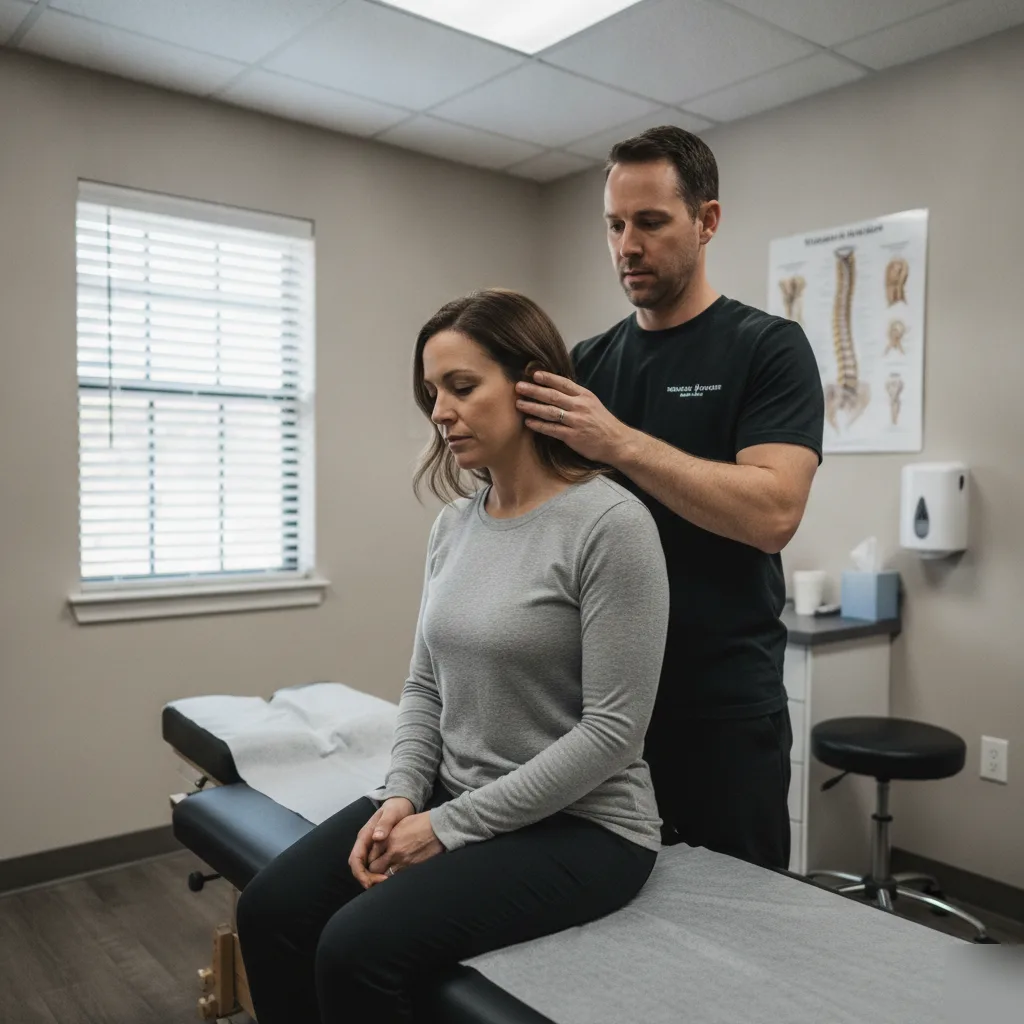
We're not guessing. We're looking for the actual source.
From there we build a plan. That might include a chiropractic adjustment, roller table therapy to loosen things up first, or acupuncture treatment if tension and stress are a big piece of your pattern. Some patients do better with a mix. We'll explain why we're picking what we're picking, not just doing it.
- A conversation about your headache pattern and daily habits
- A hands-on check of your neck, upper back, and spine movement
- Clear explanation of what we found and why it matters
- A first treatment step, often an adjustment or roller table session
- A simple plan for what the next few visits will look like
Bring a rough log if you have one. Even three or four notes about when headaches hit and how bad they were helps us more than you'd think. Patterns show up fast once we have that context.
Headache relief in Leesburg.How Chiropractic Treatment Plans and Visit Pricing Typically Work
Here's something we tell every new patient. One adjustment won't fix a headache pattern that took months to build. Most chiropractic offices, ours included, start with an exam and a history before anything else happens. That first visit usually costs more than the ones after it, because it includes the evaluation work. Follow-up visits, once a plan is set, tend to run at a flatter rate.
So what drives the cost of a plan up or down? A few things. How long you've had the headaches matters, so does whether there's a neck injury involved, like from an old car accident or years of desk work. Someone with a two-week tension headache pattern usually needs less care than someone who's had migraines for five years.
- How many visits per week the plan calls for early on
- Whether spinal decompression or roller table therapy gets added alongside adjustments
- If acupuncture is layered in for stress-related headache triggers
- How your body responds, some people shift in a few visits, others need longer
Before you book anywhere, ask what the first few weeks look like. Ask how progress gets measured, not just how the bill gets measured. A clear answer tells you a lot about the office you're calling.
We build every plan around what your exam shows, not a set package we hand everyone. That's just how it should work.
Frequently Asked Questions
Common questions from Leesburg patients about headache and migraine relief.
Can chiropractic care help with migraines, or just regular headaches?
It can help with both, but in different ways. Tension and cervicogenic headaches usually come straight from the neck, so adjustments target the source directly. Migraines are more complex, tied to triggers like sleep and hormones, but many migraine sufferers also carry neck restriction that makes attacks worse. Easing that neck component often brings real relief, even if it doesn't erase every trigger. We'll check your neck on your first visit to see how much it's playing into your pattern.
How do I know if my headache is coming from my neck?
Start at where it begins. If it starts at the base of your skull and wraps toward your temple, especially after hours on a laptop or phone, that's a strong sign your neck is the source. Watch for neck stiffness, shoulder tightness, or reduced range of motion turning your head. We see this constantly in Leesburg with desk workers who get a headache by 3pm that ibuprofen barely touches.
What happens during a first visit for headache relief?
We start with a real conversation about when your headaches hit, what they feel like, and what makes them worse. Then we do a hands-on exam of your neck and upper back, checking mobility and where things are stiff or uneven. From there we build a plan, which might include an adjustment, roller table therapy, or acupuncture if stress is a big piece. Most people are surprised how tight their neck is without realizing it.
Should new moms in Leesburg see a chiropractor for postpartum headaches?
Often, yes, because postpartum headaches are usually mechanical. Disrupted sleep and hours hunched over a nursing pillow put constant strain on the neck and shoulders, which is exactly what we handle well. But if a headache shows up with blurry vision or swelling, that's a different story, and we'll send you to your OB or the ER the same day. We always rule out serious causes before treating anything mechanical.
When should I skip the chiropractor and see a medical doctor instead?
See a doctor right away for a sudden, severe headache that hits like a thunderclap, or one paired with slurred speech, numbness, or vision loss. Also get checked after a hard fall, with fever and a stiff neck, or if you're over 50 with a brand new headache pattern. Once serious causes are ruled out, that's when we can look at whether your neck or posture is driving the pain.
Can bad posture from desk work or carrying a car seat really cause headaches?
Yes, it's one of the most common causes we see. Hours hunched over a screen or carrying a car seat on one hip pull your head forward off your shoulders. Your neck muscles work overtime holding your head up, and that tension radiates into your temples and the back of your head. If your headaches get worse after long desk days or a busy day with the baby, your neck is likely the trigger.