
Pregnancy Acupuncture in Leesburg, VA
Chiropractic care works on your joints and pelvis. Pregnancy acupuncture is a different tool for nausea, poor sleep, worry, and heartburn, and many moms use it for exactly those symptoms.
Pregnancy Acupuncture Addresses Symptoms Chiropractic Alone Does Not
Chiropractic care works on your joints, your pelvis, and how your body carries the extra weight of pregnancy. A lot of pregnancy discomfort doesn't come from a joint at all, like nausea, poor sleep, worry, and heartburn. Pregnancy acupuncture is a different tool, and many moms use it for exactly those symptoms.
If you've had a prenatal adjustment, you know how good it feels when your low back or hips finally loosen up. That's what chiropractic is built for. It looks at your spine and pelvis and how they're moving as your belly grows and your posture shifts. But some of the hardest parts of pregnancy have nothing to do with how your joints line up. You can feel great walking out of an adjustment and still be sick to your stomach by dinner, or lie awake at 2 a.m. with your mind racing.
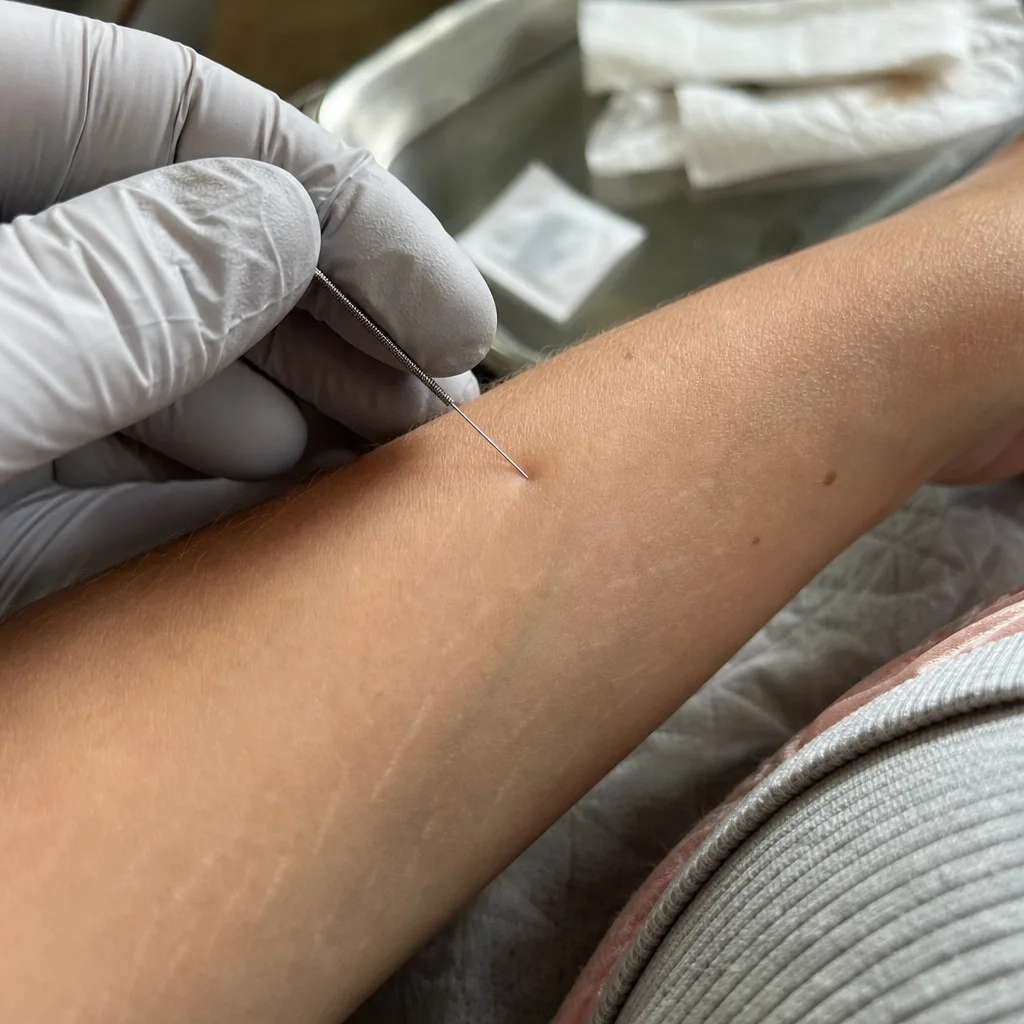
That's the gap acupuncture is meant to fill. It doesn't move bones or joints. It uses very thin needles placed at chosen points on the body, and pregnant women often turn to it for symptoms like these:
- Morning sickness and nausea that hang on through the day
- Trouble falling asleep or staying asleep
- Stress, worry, or feeling on edge
- Heartburn and an upset stomach
- Headaches and tension that don't seem tied to your posture
- Feeling worn out or low on energy
None of those are a joint problem. An adjustment isn't designed to settle your stomach or quiet a busy mind. If those are the things wearing you down, more chiropractic visits alone probably won't touch them. Acupuncture is a separate approach with a separate job.
Here's a common picture. You're 14 weeks along. Your back is fine, but you can barely keep breakfast down, and you're tired from bad sleep. You don't really need help with alignment right now. You need help with how you feel. That's when acupuncture makes more sense than booking another adjustment.
Now flip it. You're 32 weeks along. You've got sharp pain in your pelvis and a nagging ache down one leg every time you roll over in bed. That's a structural issue, and our prenatal chiropractic care and the Webster technique are built for that kind of pelvic and joint strain. Acupuncture can still help with how tense and tired you feel, but it isn't a stand-in for care aimed at your pelvis.
Some moms only need one. Some do better with both, because pregnancy rarely brings just one kind of discomfort. Your body is changing on the inside and the outside at the same time. Acupuncture and chiropractic each cover a different piece of that.
That's why it helps to have both under one roof. At New Energy Chiropractic in Leesburg, acupuncture and prenatal chiropractic care are both on our list of services. Our practice is woman-owned and focused on moms, babies, and families. Our two female doctors understand the challenges pregnancy brings. We'll talk through what's bothering you and figure out which kind of care fits it. You won't have to guess, and you won't have to shuttle between offices across town to get both.
One more thing to keep in mind. Acupuncture isn't a fix for every pregnancy symptom, and it doesn't replace your OB or midwife. Bleeding, severe pain, or any sudden change should go to your prenatal provider first. Think of acupuncture as support for the everyday discomforts that make pregnancy harder than it needs to be, especially the ones an adjustment can't reach.
What a Pregnancy Acupuncture Visit Involves
If you've never had acupuncture, the unknown part is usually the scariest part. Most moms worry about two things. Will it hurt, and is it safe for the baby? A pregnancy acupuncture visit is calmer and quieter than most people expect. Here's what one generally looks like, so you can walk in knowing what's coming.
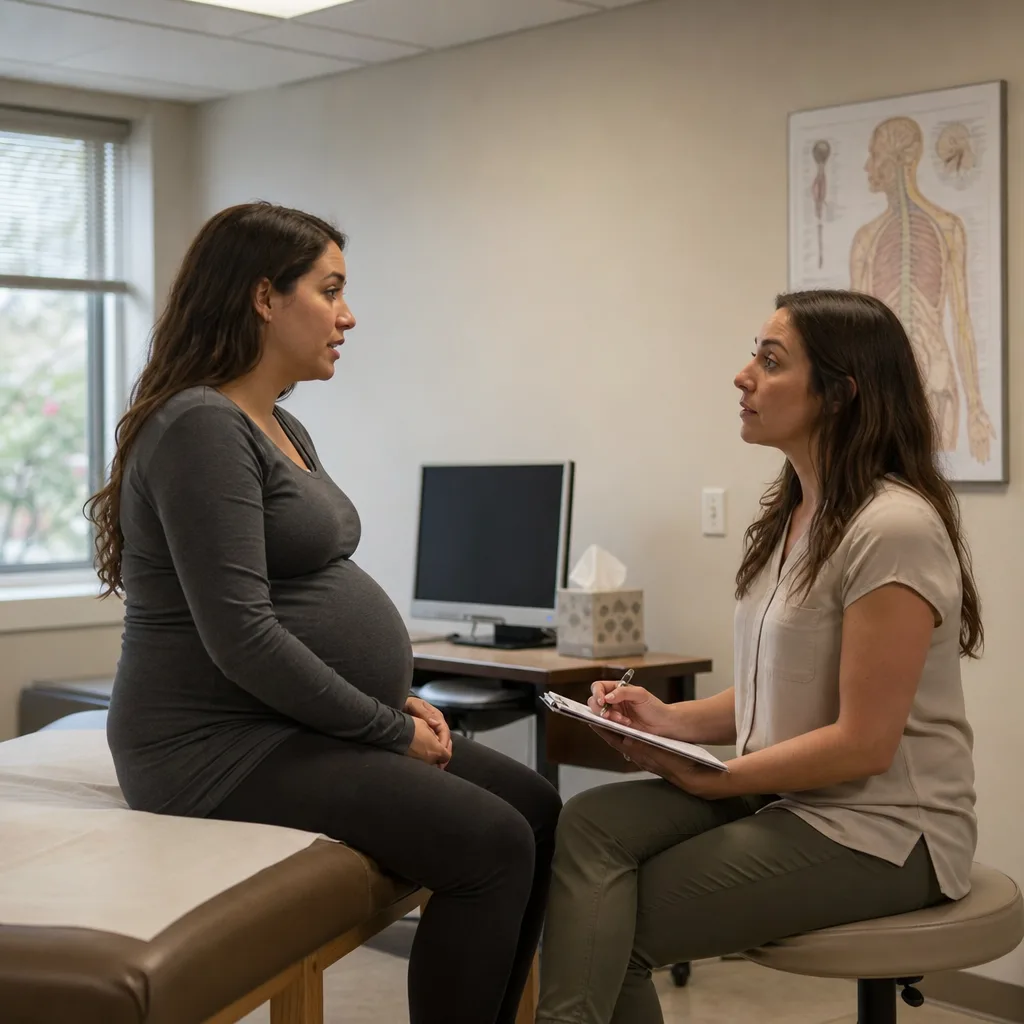
A visit usually starts with talking. Expect questions about how far along you are, how you've been sleeping and eating, and which symptoms bother you most. You'll likely also be asked about any concerns your OB or midwife has raised. This conversation matters. Pregnancy changes week to week, so the plan for a mom at 12 weeks with nausea won't look like the plan for a mom at 34 weeks who can't get comfortable at night.
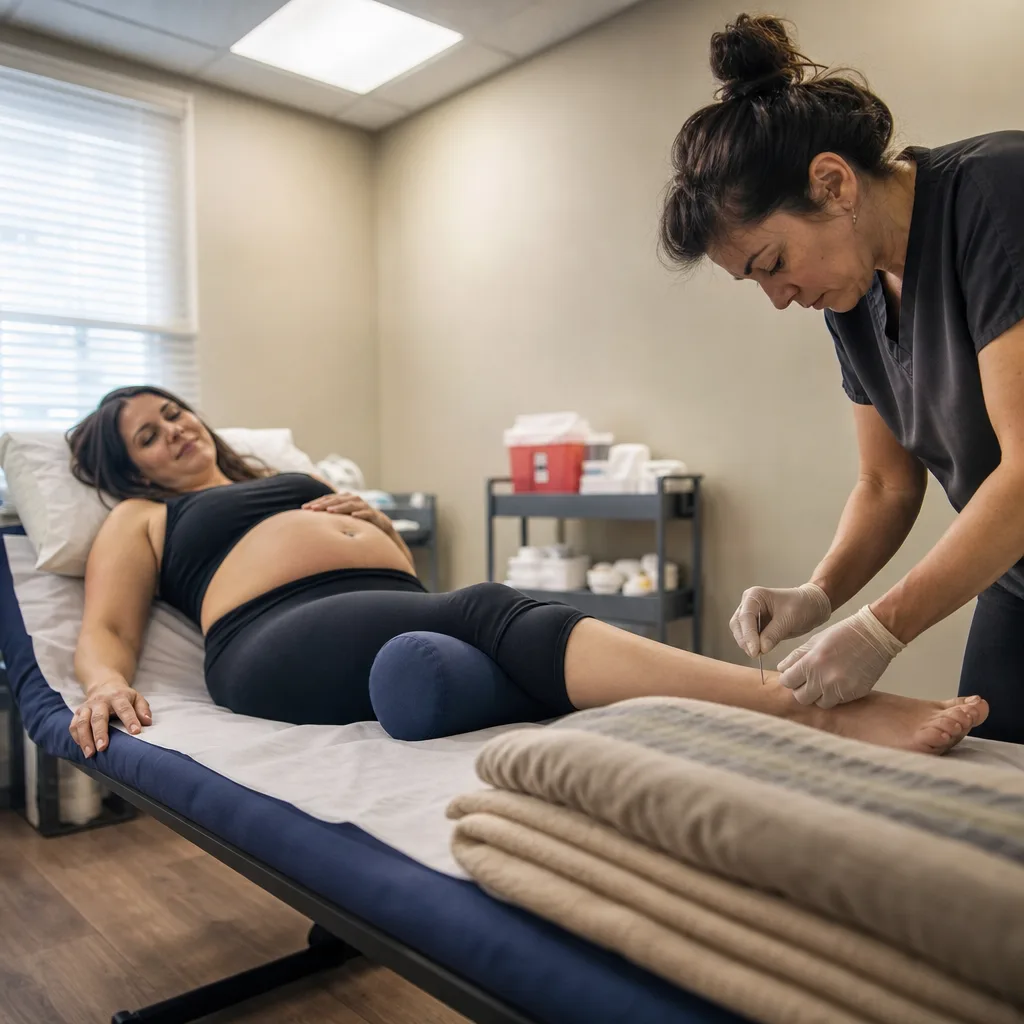
Positioning is a big part of a pregnancy session. According to studies done by the European Society of Anaesthesiology and Intensive Care, lying flat on your back get uncomfortable as your belly grows, and many women feel lightheaded in that position later in pregnancy.[1] So pregnant patients are often treated lying on their side with pillows for support, or sitting partly reclined. You should feel free to speak up and shift if anything feels off. Your comfort comes first.
Once you're settled, the needles go in. Most people barely feel them. You might notice a tiny pinch, a dull ache, or a warm, heavy feeling near the spot. Then you rest. A lot of moms say this quiet stretch is the best part. There's no one asking anything of you, and plenty of women doze off. For someone who hasn't slept well in weeks, that rest alone can feel like a gift.
Afterward, some women feel relaxed and a little sleepy. Others feel more clear-headed. Changes in symptoms like nausea or sleep may show up right away or build over a few visits. Acupuncture for pregnancy is often done as a series rather than a single session, because your body and your symptoms keep changing as the weeks go by.
A few simple things can make your first visit easier:
- Eat a light snack beforehand. Going in on an empty stomach can leave you feeling woozy, especially if nausea is already part of your day.
- Wear loose, comfortable clothes that roll up easily at the arms and legs.
- Write down your symptoms and when they hit hardest, like mornings, after meals, or at bedtime.
- Let your OB or midwife know you're trying acupuncture, and bring up anything they've told you to watch for.
- Plan a slow few minutes after your visit instead of rushing straight into errands or a busy afternoon.
If you feel nervous, say so. A good provider will explain what's happening as it happens and adjust to you. You're never locked in. If you want a needle removed or need to change position, that's a normal request, not an interruption.
Patient and compassionate healthcare in Leesburg.Questions to Ask Before Choosing a Pregnancy Acupuncture Provider
You're trusting someone with your body and your baby, so it's fair to ask questions first. A good provider won't mind. They'll answer clearly and won't rush you. Use the questions below on the phone or at your first visit. How someone answers tells you as much as what they say.
- Are you licensed to practice acupuncture in Virginia? This is the first thing to check. Acupuncture is a licensed practice in the state, and you can ask to see proof or look it up yourself.
- How much of your work is with pregnant patients? General training is a start. You want someone who works with pregnancy often and is comfortable adjusting care from the first trimester to the last weeks.
- Which points do you avoid during pregnancy, and why? A careful provider will have a ready answer. If they seem unsure, that's a sign to keep looking.
- Will you work with my OB or midwife? Your prenatal provider is still in charge of your pregnancy. Ask whether the acupuncturist is willing to share notes or follow any limits your OB or midwife has set.
- What would make you stop treatment or send me back to my doctor? You want someone who knows the warning signs and won't try to treat them through them.
- How many sessions do you expect I'll need for my symptoms? An honest answer gives you a rough plan and a time to check in, not an open-ended commitment.
Cost is the other big question, and it's worth asking about up front. Pricing for acupuncture usually works in one of a few ways. Some offices charge per session. Some offer a package of visits for a set course of care, which can make sense when symptoms like nausea or poor sleep take a few visits to ease. Your first visit may cost more than follow-ups, since it often includes a longer talk about your health and pregnancy.
Insurance is where things get mixed. Some plans cover acupuncture, some cover it only for certain conditions, and some don't cover it at all. Call your insurer and ask directly whether acupuncture during pregnancy is covered. It's also smart to ask whether you can use a health savings account or flexible spending account, since many families plan those funds around a new baby anyway.
- What does a first visit cost compared with a follow-up?
- Do you offer packages, and what happens if I need to stop early because of my pregnancy?
- Do you bill insurance, or will I need to submit a claim myself?
Pay attention to how you feel during the call, too. If you feel brushed off, pressured into a big package, or told acupuncture will fix everything, trust that feeling. Pregnancy care should feel steady and honest, not salesy.
At New Energy Chiropractic, we're glad to answer every one of these questions. We're a woman-owned practice in Leesburg that focuses on moms, babies, and families. We're led by two experienced female doctors, and we've earned a 5.0 average rating from more than 150 patient reviews. Because we offer both acupuncture and prenatal chiropractic care, we can help you sort out which one fits what you're feeling right now.
When to Combine Acupuncture With Prenatal Chiropractic Care
The easiest way to tell whether you'd benefit from both is to sort your symptoms into two piles. In the first pile, put the pain that changes when you move, sit, stand, or roll over. In the second, put the things that don't change with movement at all, like nausea, a racing mind, heartburn, or feeling drained. If both piles are full, combining care usually makes sense. If one pile is nearly empty, you probably only need one kind of care.
The tricky part is that pregnancy symptoms feed into each other. Here are a few common mixes where both kinds of care can work together:
- You can't sleep because your hip aches when you lie on your side, and once you're awake, worry keeps you up. The hip is a joint issue. The worry and restless sleep aren't.
- Low back pain makes you tense all day, and the tension turns into headaches and short patience by evening.
- You're in the last weeks, your pelvis feels heavy and sore, and you're also anxious and worn out as your due date gets close.
- Nausea keeps you on the couch, and all that sitting is making your back and neck stiff.
In each of these, treating only one side can leave you feeling halfway better. Your back might loosen up while sleep stays rough, or your stomach might settle while your pelvis still hurts every time you climb stairs.
You don't have to start everything at once. A simple approach is to begin with the symptom that's hurting your day the most. Give it a few visits, then take stock. Write down what changed and what didn't. If your back feels better but you're still exhausted and on edge, that leftover symptom tells you it's time to add the other kind of care. This way, you're adding care for a clear reason, not just booking more appointments.
Time and money matter too, especially with a baby on the way. Combining care means more visits, so ask how often each one is recommended and when the plan will be reviewed. A good plan should get smaller as you feel better, not stay the same week after week.
There are also times when one is enough. If your only complaint is pelvic or back pain, prenatal chiropractic care may cover it. If your joints feel fine and nausea or stress is the problem, acupuncture alone may be the better fit. And if getting to appointments is starting to stress you out more than your symptoms do, cut back. Rest is part of pregnancy care, too. Whatever you choose, keep your OB or midwife in the loop.
Because New Energy Chiropractic offers both, our two female doctors can look at your whole list of symptoms and help you decide whether you need one, the other, or both.
Prenatal and acupuncture care in Leesburg.When Pregnancy Acupuncture Is Not the Right Next Step
Acupuncture can help a lot of pregnant women. It isn't the right next step for everyone, though, and it isn't always the right step right now. Here's when we'd tell you to hold off, try something else first, or check with someone else before you book.
Your OB or midwife has said no, or hasn't weighed in yet. If you've been told your pregnancy is high-risk, or you're being watched closely for something like preterm labor or blood pressure problems, ask your prenatal provider before you try acupuncture. If they want you to wait, wait. Their "not yet" matters more than anything on this page.
You're dealing with something that needs a doctor today. As we said earlier, bleeding, severe pain, or a sudden change goes to your OB or midwife first. The same goes for a symptom that keeps getting worse instead of holding steady. Acupuncture is for everyday discomfort. It isn't a way to manage a problem that hasn't been checked.
A few health situations call for extra care or a different plan:
- You take a blood thinner or have a bleeding disorder. Needles may not be a good fit, so talk with your doctor first.
- You have a skin infection, rash, or open sore where needles would go.
- You have a seizure disorder or a pacemaker. Bring it up before any treatment starts.
- You faint easily or tend to get very lightheaded. Tell your provider so they can plan around it, or decide it's not worth it.
Your fear of needles is bigger than your symptoms. Some nervousness is normal, and most moms find it fades quickly. But if just thinking about needles makes your heart pound for days, a session might add stress instead of easing it. That's okay. You don't have to push through something that makes pregnancy harder.
Your symptoms are mild and fading on their own. Early nausea often eases as the first trimester ends. If you're near that point and feeling a little better each week, it's fair to wait and see. The same is true if a few changes to your sleep routine or meals are already helping. You don't need care for a problem that's going away.
Your problem is mostly in your joints. If your main complaint is pelvic pain, low back pain, or pain that changes when you move, acupuncture probably isn't where to start. As we covered above, prenatal chiropractic care is built for that kind of strain.
You're stretched too thin. Late pregnancy is busy. If one more weekly appointment and drive across Leesburg would wear you out more than your symptoms do, skip it for now. Rest counts as care.
None of this means acupuncture is off the table for good. Plenty of moms who wait in the first trimester, or who get the okay from their OB a few weeks later, start then and do well. The goal is to pick the right care at the right time. Sometimes that means not booking yet.
Frequently Asked Questions
Common questions from Leesburg moms about pregnancy acupuncture.
Can acupuncture help turn a breech baby or get labor started?
Acupuncture is meant for everyday pregnancy discomfort like nausea, stress, and poor sleep, not as a guaranteed way to turn a baby or start labor. If you're dealing with a breech presentation or want to talk about labor prep, bring it up with your OB or midwife first so they can guide what's safe for your specific pregnancy.
Is it normal to feel sleepy or lightheaded right after a session?
Yes, feeling relaxed or a little sleepy afterward is common, and some women feel more clear-headed instead. Because lying flat can make some moms lightheaded later in pregnancy, sessions are usually done on your side or reclined, and it helps to plan a few slow minutes before jumping into errands.
How many acupuncture visits does it usually take to notice a change?
It varies, since some women notice a difference in symptoms like nausea or sleep right away and others see gradual change over a few visits. Acupuncture for pregnancy is often done as a short series rather than one visit, because your symptoms keep shifting as the weeks go by.
What if I'm too nervous about needles to try acupuncture?
That's a fair reason to wait, and you shouldn't push through fear that outweighs your symptoms. Most moms find nervousness fades quickly once they see how gentle a session is, but if just thinking about needles makes your heart race for days, it's okay to hold off or skip it.