
Roller Table Therapy in Leesburg,VA
A gentle warm-up for your spine. Slow-moving rollers loosen tight back muscles and stiff joints so your body is relaxed and ready for the adjustment that follows.
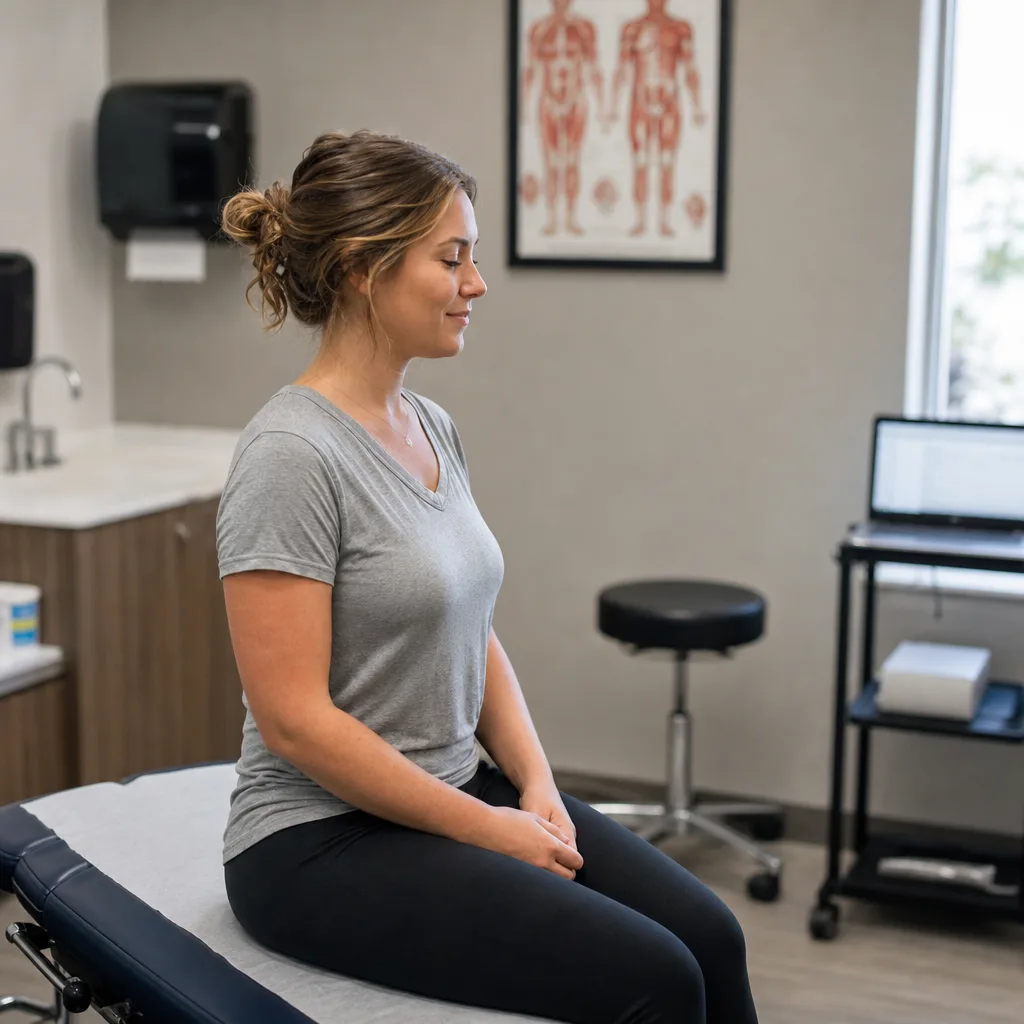
What Roller Table Therapy Does Before an Adjustment
Roller table therapy is a gentle warm-up for your spine. Slow-moving rollers loosen tight back muscles and stiff joints so your body is relaxed and ready. On its own it feels nice, but its real value is helping the adjustment that follows.
Roller table therapy is simple: you lie face-up on a padded table. Under the padding, a set of rollers moves slowly up and down along your back, from your lower back toward your shoulders and back again. It feels like a slow, rolling massage. Most people find it easy to relax, and some nearly fall asleep.
Here's the main point, the roller table isn't the treatment that fixes your back. According to Pivotal Health Solutions, it's the part that gets your back ready.[1] Think of it like stretching before a run. You can skip it, but your body usually responds better when it's warmed up first.
So what's going on while those rollers move?
- Your spine gets gentle motion, one section at a time. As each roller passes, it lifts and eases the small joints between your vertebrae. Joints that have been stuck in one position all day start to move again.
- Tight muscles start to let go. The long muscles along your spine often stay clenched after hours at a desk or behind the wheel. Slow, steady pressure helps them loosen.
- Your body stops guarding. When your back hurts, your muscles brace to protect it. That bracing makes an adjustment harder on you. A relaxed back moves more easily and comfortably.
- Blood flow picks up in the area. Movement and pressure bring circulation to tired tissue, which helps it feel less stiff.
Picture getting out of the car after a long drive. You stand up and your lower back feels like a locked door. If someone tried to adjust you right then, your muscles would fight it. Now picture the same back after a slow, rolling warm-up. It's looser, you're calmer, and you're not bracing for anything. That's the difference the roller table makes.
It's worth being honest about what the roller table won't do. It won't line up your spine by itself. It won't fix a disc problem or clear up sciatica on its own. The relief you feel right after a session tends to be mild and short-lived if nothing else follows it. If someone offers roller table sessions alone as a cure, that's a red flag.
A looser, calmer back is easier to adjust, and the adjustment is often more comfortable for you. That matters even more if you're already sore, nervous about getting adjusted, or just stiff from the way you spend your days.
If you've ever walked into a chiropractor's office tense and walked out feeling like the visit didn't quite take, a warm-up like this is often the missing piece. It's gentle, it's low-effort for you, and it sets up everything that comes after.
Who Benefits Most From This Modality
The people who get the most out of a roller table aren't usually the ones with one sharp injury. They're the ones whose backs are tight from how they live every day. If your spine spends hours stuck in one position, a slow warm-up before your adjustment can make a real difference.
- Desk workers. Sitting all day lets the muscles along your spine lock up. You might stand at 5 p.m. and feel like you need a minute before you can walk straight. That stiffness is exactly what the rollers work on.
- Long commuters. Hours in the car, hands on the wheel and hips locked in a seat, leave your lower back tight and your shoulders hunched. A warm-up helps your body let go of that drive before anyone adjusts it.
- New and busy parents. Carrying a car seat, rocking a baby, bending over a crib, and lifting toddlers all day puts steady strain on your back. Many parents also feel tense and rushed when they finally get to an appointment. A few calm minutes on the table helps you settle in.
- Active people and weekend athletes. After a hard workout, a long run, or a Saturday game, tight muscles can make an adjustment feel harder than it should. Loosening up first helps the adjustment go more smoothly.
- First-timers and nervous patients. If the idea of getting adjusted makes you brace, you're not alone. Lying down and letting the rollers move gives your body a chance to relax, so you're not fighting the adjustment before it starts.
Notice what these folks have in common. Their main problem is tension and stiffness that builds up over time. The roller table helps with that tension, and the adjustment that follows does the deeper work.
Now for the honest part. The roller table isn't right for everyone, and it isn't right for every stage of healing.
If you were just hurt, like a fresh car accident, a fall, or a back that went out this morning, rolling pressure on a sore, swollen area may not feel good at all. Some injuries need to calm down before any warm-up makes sense. The same goes if you've recently had back surgery, have a known fracture, or have weak bones from something like osteoporosis. Bring these up with your chiropractor before you lie down. A careful provider will ask about your history and may skip the table for you, and that's a good sign, not a missed step.
If you're pregnant, lying flat on your back with rollers underneath may not be comfortable, especially later on. Pregnancy calls for its own approach, and our prenatal chiropractic care and Webster technique are built for that season.
And if your back feels fine and you just want a massage, you can probably skip it. A roller table is most useful as the first step before an adjustment, not as a stand-alone treat.
If you saw yourself in that first list, a warm-up before your adjustment is worth asking about. If you saw yourself in the second part, that doesn't mean chiropractic care is off the table. It just means your plan should start somewhere else.
Discover the many services available in Leesburg.When Roller Table Therapy Is Not the Right Starting Point
A roller table is built for assisting the back where it needs it most: a back that's tight and stiff from everyday life. If your pain feels different, the warm-up may not be where your care should begin. Here's how to tell.
Start by asking yourself one question. Does your back feel tight, or does it hurt in a sharp, shooting, or spreading kind of way? Tightness is the roller table's job. Pain that travels or stabs usually means something else is going on, and that needs attention first.
- Pain that shoots down your leg. If it runs from your low back into your hip, thigh, or foot, a nerve may be irritated. A rolling warm-up won't reach that. Our sciatica treatment is the better place to start.
- A known or suspected disc problem. If you've been told you have a bulging or herniated disc, the goal is to take pressure off that disc, not just loosen the muscles around it. Look at our herniated disc treatment and spinal decompression pages first.
- Pain that's mostly in your neck or head. The rollers work along your back, from your low back toward your shoulders. If your main complaint is neck pain or headaches, neck pain treatment or headache and migraine relief fits you better.
- Hip pain that doesn't feel like a back problem. Sometimes the hip itself is the source. Hip pain treatment starts there.
- Stress that shows up in your body. If you're wound tight from worry more than from sitting or lifting, stress and anxiety acupuncture or cupping therapy may help you more than a warm-up table.
Kids are their own case, too. Babies and young children need a gentle approach made for small bodies. That's what our pediatric chiropractic care and infant chiropractic care are for.
There's one more sign to watch for, and it shows up on the table itself. The rollers should feel steady and soothing. If the pressure feels sharp, or a spot gets more sore as the rollers pass over it, say so right away. That isn't you being difficult. It's useful information. It tells your chiropractor that this area isn't ready for rolling pressure and your plan should change.
None of this means the roller table is bad, or that you'll never use it. Plenty of people start with a different kind of care and add the warm-up later, once the sharp pain settles and stiffness is the main thing left. The order just matters. A warm-up helps a back that's ready to be adjusted. It can't stand in for care aimed at a nerve, a disc, or a different part of your body.
If you're not sure which group you're in, that's normal. Pain is hard to sort out on your own, and you don't need to figure it out before you call. Tell us where it hurts and what it feels like, and our two doctors can help you decide where to start.
How This Modality Fits Into a Customized Visit and Treatment Plan
A roller table works best as one piece of a bigger plan. Where it goes in your visit, and whether it stays in your plan over time, should depend on your back and your goals. A schedule that's the same for everyone isn't a good reason. At New Energy Chiropractic, every treatment plan is customized to the person on the table, and we look for the root cause of your pain instead of only easing how it feels today.
In most chiropractic offices that use one, the roller table comes near the start of a visit, before the adjustment. That order is the whole point, since the warm-up is there to make the adjustment easier. After that, your plan can branch out based on what's driving your pain.
- A chiropractic adjustment is usually the main event that the warm-up sets up.
- Spinal decompression may be added when pressure on a disc is part of the picture.
- Acupuncture or cupping therapy can join the plan when muscle tension or stress needs another approach.
- Nutritional counseling may help when how you eat and live affects how you heal.
Your plan should also change as you get better. Early on, when you're stiff and guarded, a warm-up can make a big difference in how the adjustment feels. Later, as your back moves more freely, you may need it less, or your chiropractor may drop it so you can focus on something else. A good plan gets lighter as you improve, not heavier.
You might also wonder what a warm-up adds to the bill. In chiropractic care, roller table time is often included in the cost of a regular visit. Some offices list it as a separate charge, though. Insurance coverage varies by plan, and some plans treat it differently than the adjustment itself. What you'll pay over time usually depends on how many visits your plan calls for, what else is part of each visit, and how your insurance handles each piece.
Before you start care anywhere, these questions are worth asking:
- Is the roller table part of a regular visit, or is it billed on its own?
- Why is it in my plan, and what is it helping the adjustment do?
- How will we know when I don't need it anymore?
- What should I tell you if something feels off while I'm on the table?
Clear answers to those questions tell you a lot. They show that the warm-up is there for a reason tied to your back, and that someone is watching whether it still earns its spot.
That's how we think about it, too. Our two doctors care for moms, babies, and families every day. That includes busy parents whose backs carry a lot, which is why we believe your plan should fit your life and your body. If a roller table warm-up helps your adjustment do more, we'll use it. If something else should come first, we'll tell you.
Get a custom roller table therapy service in Leesburg.What to Expect During and After a Session
Most people are surprised by how little they have to do. In most offices, you stay in your regular clothes. Loose, comfortable clothes make it easier to settle in, so leggings or sweats beat stiff jeans and a heavy belt. There's nothing to prepare and nothing to learn. You lie down, get comfortable, and let the table do the work. A session usually lasts a few minutes, not an hour.
The first couple of passes tell you a lot about your back. Tight spots tend to feel firmer as the rollers move over them. Then, as the passes repeat, that firm feeling often softens. That's your muscles letting go. Many tables let the pressure be turned up or down, so if it feels like too much, just say so. You can talk, close your eyes, or simply breathe.
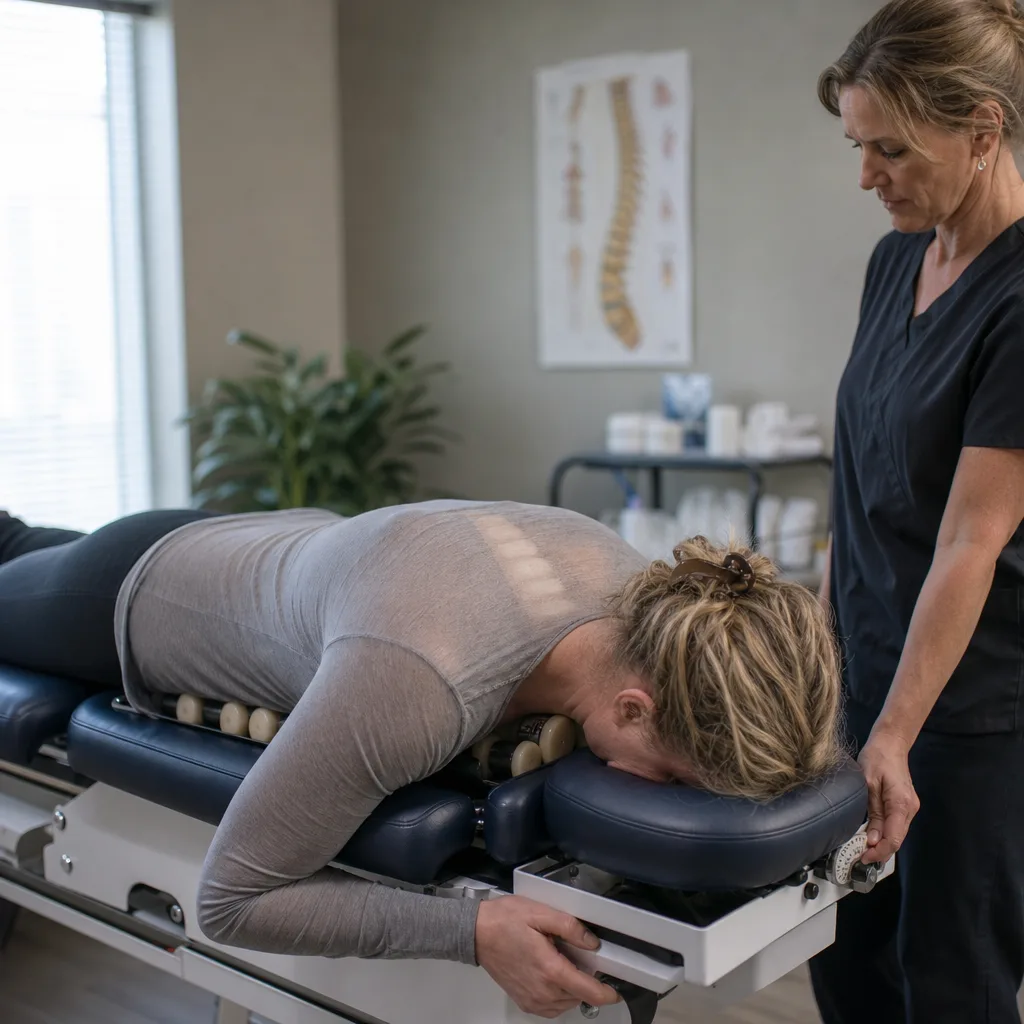
Here's what's normal while you're on the table:
- A firmer feeling over stiff areas that eases as the rollers keep moving
- A warm, looser feeling in your lower back and between your shoulder blades
- Your breathing slowing down without you trying
- Feeling a little drowsy, especially if you came in rushed or tired
When the rollers stop, take your time sitting up. Your body has just spent a few minutes relaxing, and there's no prize for jumping off the table. This is the moment the warm-up was built for. Your back is looser and you're not bracing, so you're ready for your adjustment.
Later that day, most people notice they can turn, bend, and reach a little more easily. Picture a parent who spent Saturday carrying a toddler through errands. By evening, they notice they can lift the car seat without that familiar catch in their back. Some people feel mild tenderness afterward, a lot like the day after a massage. That soreness usually fades within a day or so. If soreness grows instead of fading, or new pain starts spreading into your leg or arm, mention it before your next visit so your plan can change.
Don't judge the roller table by one session. As noted earlier, the quick relief from rolling alone doesn't last long. The real signs show up across several visits, when the warm-up is doing its job of helping your adjustment work better:
- The first few passes feel less firm than they did at your early visits
- You relax on the table faster and brace less when the adjustment starts
- Your adjustments feel smoother and more comfortable
- The loose feeling lasts longer between visits
Those changes mean your back is responding. When they show up, it may be time to talk about using the table less, or not at all.
Frequently Asked Questions
Common questions from Leesburg patients about roller table therapy.
Do I need to take my clothes off for roller table therapy?
No, you stay fully dressed during roller table therapy. Loose, comfortable clothes like leggings or sweats work best, since stiff jeans or a heavy belt can get in the way of the rollers moving smoothly along your back.
Will roller table therapy hurt if my back is already sore?
It shouldn't hurt, but tight spots may feel firmer at first as the rollers pass over them. That firmness usually softens within the same session as your muscles let go, but if any spot feels sharp or gets more sore instead of easing up, tell your chiropractor right away.
How long does a roller table session take?
A session usually lasts just a few minutes, not an hour. It's meant to be a quick warm-up before your adjustment, not a long stand-alone treatment.
Can I go straight back to work or errands after a session?
Yes, most people feel looser and can move more easily right after, but it helps to sit up slowly instead of jumping off the table. Later that day you may notice easier bending and reaching, like being able to lift a car seat without the usual catch in your back.