
Traditional Chinese Medicine Consultation in Leesburg, VA
A sit-down conversation and a careful look at how your whole body is doing, so any care that follows is chosen for your pattern, not picked off a menu by symptom name.
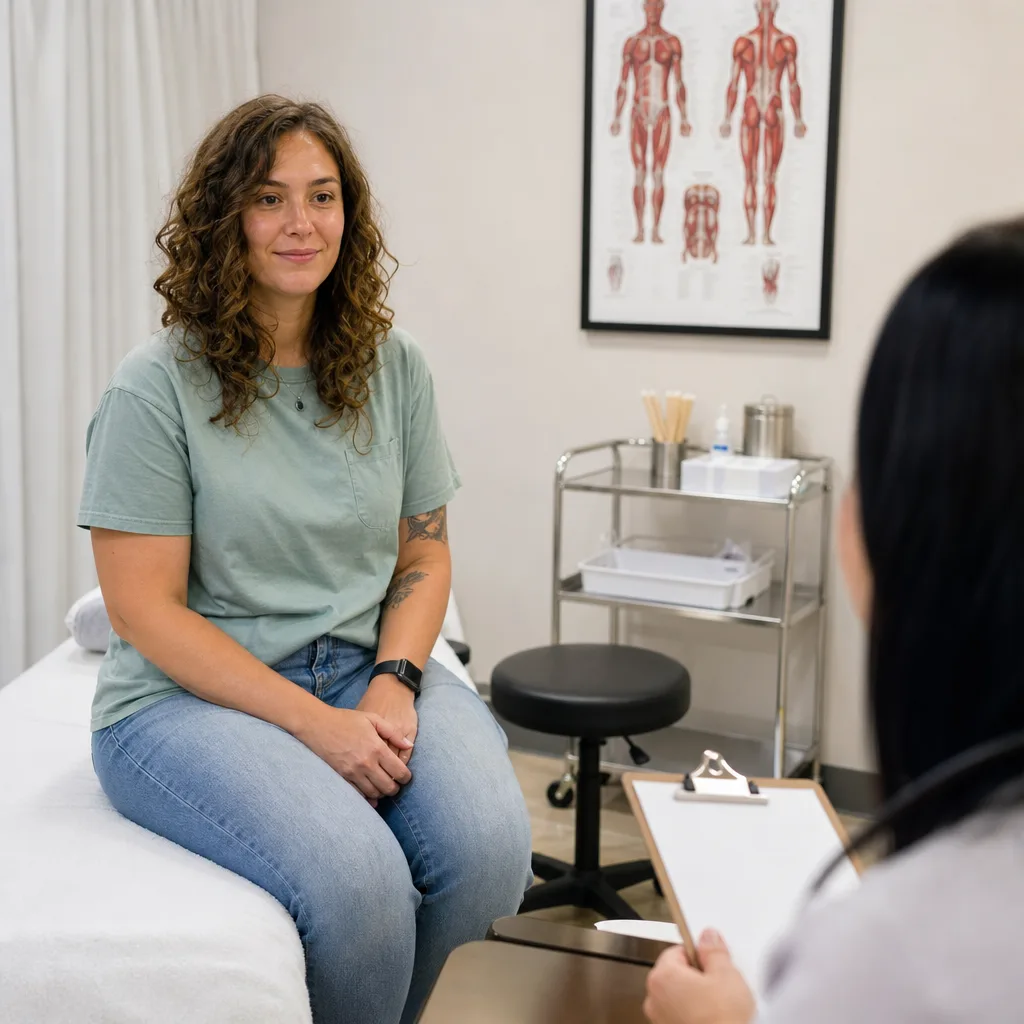
A TCM Consultation Is an Assessment, Not a Treatment Session
A Traditional Chinese medicine consultation is about understanding you before anyone treats you. The practitioner asks questions and looks at your tongue and pulse to find the pattern behind your symptoms. That pattern decides what kind of care, if any, makes sense next.
A lot of people picture needles the moment they hear about Chinese medicine. A consultation isn't that. It's a sit-down conversation and a careful look at how your whole body is doing. The goal is to figure out what's going on before anyone decides what to do about it.
TCM doesn't look at a symptom on its own. It looks for a pattern. Say two people both come in with headaches. One feels worse when she's stressed and has a tight jaw by the end of the day. The other feels drained, sleeps poorly, and gets the headache when she skips meals. In TCM, those are two different patterns. They'd likely lead to two different plans, even though the main complaint has the same name.
To find your pattern, a TCM practitioner usually works through a few things:
- Questions that go past your main complaint, like how you sleep, your energy through the day, digestion, appetite, thirst, stress, and whether you tend to run hot or cold
- For women, questions about the menstrual cycle, pregnancy, or postpartum recovery, since TCM sees these as closely tied to overall health
- A look at your tongue, including its color, coating, and shape
- Feeling the pulse at both wrists, noticing things like strength, speed, and rhythm
- Your health history, current medications, and any supplements you already take
Some of those questions might feel unrelated. Why ask about your digestion when you come in for trouble sleeping? According to the National Institutes of Health, for TCM, those details are often connected. They help explain why one person's sleep problem isn't the same as someone else's.[1]
What you walk away with is a clearer picture and a starting point. Depending on your pattern, the next step might be acupuncture, cupping, nutritional counseling, or nutritional supplements. Those are some of the services we offer. Sometimes the best next step is simply a few changes to how you eat, rest, or handle stress. And if something you describe sounds like it needs a medical workup, the honest answer is to see your doctor first.
That's why it helps to start here instead of booking a treatment and hoping it fits. A consultation means any care that follows is chosen for your pattern. It isn't picked off a menu by symptom name.
You don't need to prepare much, but a few things make the conversation more useful. Bring a list of your medications and supplements. Jot down when your symptoms start and what makes them better or worse. If you can, skip brushing your tongue or drinking coffee right before you come in, since both can change how your tongue looks. Most of all, come ready to talk openly. The small details you'd normally leave out are often the ones that matter most.
Discover more holistic services in Leesburg.How This Consultation Connects to Acupuncture, Cupping, and Holistic Care
Think of the consultation as the map and the other services as the roads. The pattern you leave with doesn't just point to a service. It shapes how that service should be aimed at you.
Here's how a pattern can line up with the care we offer:
- Stress that shows up as racing thoughts, a tight chest, or poor sleep may point toward stress and anxiety acupuncture.
- Aches that feel stuck or heavy, especially in the shoulders and upper back, may make cupping therapy worth a look.
- Pain that keeps coming back may fit pain management acupuncture, sometimes alongside chiropractic care.
- Trouble getting pregnant, or discomfort during pregnancy, may lead to fertility acupuncture or pregnancy acupuncture.
- Patterns tied to digestion, energy, or appetite often call for nutritional counseling first, before anything else.
- Emotional strain that doesn't fit neatly anywhere else is where some people try flower essence therapy.
The same service can look different for two people. Acupuncture for a drained, run-down pattern isn't aimed the same way as acupuncture for a tense, wound-up one. That's the real value of starting with an assessment. It keeps the plan specific to you.
Picture a new mom a few months after giving birth. Her neck aches from nursing, she's tired in a way coffee doesn't fix, and she's sleeping in short bursts. She could book a neck treatment and stop there. A consultation looks at all three things together. It might show that tiredness and poor sleep are part of the same picture as the neck pain, and that changes what makes sense to try first.
That kind of whole-person view fits how we work. New Energy Chiropractic is a woman-owned practice led by two experienced female doctors. We focus on moms, babies, and families, and we look for the root cause instead of just managing symptoms. A TCM consultation is one more way to get at that root cause, next to chiropractic adjustments and the rest of our care.
If you're not sure the Chinese medicine lens is right for you, a holistic health consultation is another way to start. And if your problem is clearly mechanical, like a back that went out after lifting, going straight to back pain treatment may be the simpler choice.
Whatever is recommended, you should understand why. These are fair questions to ask:
- Why does this service fit my pattern?
- Should I try one thing first, or a few together?
- What changes should I notice, and how soon?
- When would we know it's time to change the plan?
A good answer connects back to what came up in your consultation. If it doesn't, ask again. Sometimes the honest recommendation is just one service, or none at all.
Common Reasons Leesburg Patients Book This Consultation
Most people don't book a TCM consultation because one thing is badly wrong. They book because a few things have been a little off for a while, and nothing they've tried has tied it together. If any of these sound like you, you're the kind of person this consultation is built for.
- Sleep that won't settle. You fall asleep fine but wake at the same time every night. Or you lie there with your mind running. Or you sleep eight hours and still wake up tired. Those are different problems, and it helps to know which one you have.
- Stress that lives in your body. Tight shoulders, a clenched jaw, a stomach that knots up before a busy week. You know stress is part of it, but you want more than "try to relax."
- Digestion that's never quite right. Bloating after meals, a poor appetite, or a gut that changes with your mood. Nothing bad enough for a big workup, but enough to notice every day.
- Cycle changes or trying to conceive. Painful or irregular periods, strong PMS, or months of trying without success. Many women want a fuller picture before they start fertility acupuncture.
- Pregnancy and the months after. Nausea, swelling, poor sleep, or feeling drained long after the baby arrives. Given our focus on moms and families, this is a natural fit for the way we already care for patients.
- Pain that keeps coming back. The same headache, the same sore low back, the same stiff neck. It eases with treatment, then returns. You want to know why it keeps finding its way back.
- Feeling run down with no clear answer. Your bloodwork came back normal, but you don't feel normal. Low energy, catching every cold, feeling cold when others are comfortable.
Notice what these have in common. None of them is a single, clear injury. They're the kind of problems where people try one fix, then another, and end up with a cabinet full of supplements and no real plan. That's exactly where a pattern-based look earns its place. It gives you a reason for what you try next, instead of one more guess.
Some people come in with more than one item from that list. That's not a problem. It's often more useful, because it gives the practitioner more to work with. Poor sleep plus a touchy stomach plus a short temper may turn out to be one story, not three.
Others book for a simpler reason. They're curious about acupuncture or cupping but nervous about needles or not sure it's right for them. A consultation lets you ask questions, hear what fits your situation, and decide with no pressure to start anything that day.
One thing a consultation isn't for is a brand-new, severe, or fast-changing symptom. Sudden chest pain, a high fever, unexplained weight loss, or new numbness needs your doctor first. A TCM consultation works best alongside regular medical care, not in place of it.
If you've read this far and thought, "That's me, but I couldn't explain it to anyone," that's okay. You don't have to show up with the right words. Bring what you've noticed, and the consultation helps sort out what it means.
When a TCM Consultation Is Not the Right First Step
A consultation isn't the right starting point for everyone. We'd rather tell you that now than have you book something that doesn't fit. Here are the times we'd point you somewhere else, or tell you to wait.
If you were in a car accident last week or twisted your back moving furniture, you don't need someone reading your pulse to explain why. The cause is clear. Get checked by your doctor first, and if it's a muscle or joint problem after that, auto injury chiropractic care or whiplash treatment is the more direct path.
If you're waiting on test results, a scan, or a specialist visit, let that finish. A TCM consultation works best once serious causes have been ruled out. That's especially true for the red-flag symptoms we mentioned earlier. Come in after you know what you're dealing with, not while you're still finding out.
You want a diagnosis or a second opinion on one. TCM looks for patterns, not disease names. It won't tell you whether you have a thyroid problem, an ulcer, or anything else your doctor would name. If that's the question on your mind, a medical provider is the right person to ask.
You're hoping to stop taking medication. A consultation isn't a way to replace a prescription. Don't stop or change any medicine without talking to the doctor who prescribed it. TCM can sit alongside your regular care, but it doesn't take its place.
Something feels wrong in your pregnancy. If you notice a change that worries you, call your OB or midwife first, every time. Pregnancy care in TCM is for comfort and support once your provider has said things look okay.
You already know exactly what you want. Maybe you've had cupping before and your shoulders are tight after a long week of yard work. You don't need a full assessment to book that. Going straight to the service is fine, and it's simpler.
You're not ready to change anything. A consultation often ends with suggestions about how you eat, sleep, or handle stress. If you're in a stretch of life where none of that is possible right now, like a move, a new baby with no help, or a work crunch, it may be smarter to wait. The advice is only useful if you can act on it.
You want one visit to fix it. Patterns that took months or years to build don't usually clear up after one conversation. If you're looking for a quick, one-time fix, you'll probably be let down, and we'd rather you know that going in.
None of this means the door is closed. It just means timing matters. If your situation changes, or you've got answers from your doctor and still feel off, that's a good time to come back to this.
Get a traditional Chinese medicine consultation in Leesburg.What a Consultation Costs and What Drives the Price
There isn't one set price for a TCM consultation across the board. What you pay depends on how the visit is set up and what, if anything, comes after it. It's worth knowing how that works before you book, so the number you're quoted makes sense.
Most of the cost questions aren't about the first visit. They're about the plan that follows. A consultation is usually one appointment. Acupuncture, cupping, or nutritional counseling may be a series of visits. So the real question is less "What does today cost?" and more "What am I likely to spend over the next couple of months, and why?"
Here's what tends to move the price up or down:
- Consultation alone or with treatment. Some offices charge for the assessment by itself. Others fold it into a first visit that also includes a treatment like acupuncture. A combined visit costs more, but you may not pay for a separate appointment later.
- Length of the first visit. A first visit with a full history takes longer than a follow-up check-in, and it's often priced that way.
- How many follow-ups you need. A simple pattern might need a short plan. Something that's been going on for years usually takes longer to shift, and that adds up.
- Add-ons. Supplements, take-home items, or a second service in the same visit can add to the total.
- Insurance. Coverage for acupuncture varies a lot from plan to plan, and a TCM consultation on its own may not be covered at all. Call your insurer and ask about your specific plan. If you have a health savings or flexible spending account, ask your plan administrator whether these visits qualify.
This is where starting with a consultation can save money. If you book treatments one at a time based on a symptom name, you may pay for a few that don't fit before you find one that does. Starting with your pattern gives each visit after it a reason to be there. And if the honest answer is that you only need one thing, or nothing at all, that's money you don't spend.
Before you commit to anything, these questions help you avoid surprises:
- Is the consultation billed on its own, or is it part of a treatment visit?
- If you recommend follow-up care, how many visits are we talking about?
- When will we check whether it's working, so I'm not paying for something that isn't helping?
- Will anything be billed separately, like supplements?
- Can you give me a written breakdown of what you're recommending?
A clear answer to each of these is a good sign. Be careful with any plan that asks you to prepay for a long run of visits before you've had a chance to see how your body responds. You should be able to try a small step first and decide from there.
If cost is part of what's holding you back, just ask us. We'll walk you through how a consultation at our Leesburg office is set up and what it would cost before you book, so you can decide with the full picture.
Frequently Asked Questions
Common questions from Leesburg patients about Traditional Chinese medicine consultations.
Is Traditional Chinese medicine expensive compared to other care?
It depends on how your plan is built, not on a flat rate. A standalone consultation usually costs less than a visit that includes treatment the same day, and your total cost over time depends on how many follow-ups your pattern needs. Insurance coverage for acupuncture and related care varies a lot by plan, so it's worth calling your insurer before you book.
Can Traditional Chinese medicine help with sinus congestion?
It can be part of the picture, but a consultation looks at the whole pattern behind your congestion, not just the stuffy nose. Sinus trouble often shows up alongside other clues, like how you sleep or handle stress, and those details help shape whether acupuncture, nutritional counseling, or another approach fits best. If your congestion is sudden or severe, see your doctor first before booking a consultation.