
Stress and Anxiety Acupuncture in Leesburg, VA
A calm, hands-on way to help your body ease out of that tight, on-edge feeling, as one steady part of a bigger plan alongside your doctor or therapist.

Deciding If Acupuncture Fits Your Stress or Anxiety
Stress and anxiety acupuncture fits best when stress is wearing you down but you can still get through your days. It works as one steady part of a bigger plan, not as a swap for your doctor or therapist. If your anxiety is severe, getting worse fast, or scary, start with medical or mental health care first.
Stress and anxiety acupuncture isn't a fix for every kind of worry. It's a calm, hands-on way to help your body ease out of that tight, on-edge feeling. It works best alongside other things that keep you steady, like sleep, movement, good food, and talking to someone you trust. So the real question isn't whether acupuncture can cure anxiety. It's whether your stress is the kind that a regular, quiet hour of care could help you manage.
Here's what that often looks like: you're not in crisis, but your shoulders live up by your ears. You lie awake running through tomorrow's to-do list. Your jaw is sore when you wake up, and little things set you off more than they used to. You've tried to just push through, and it isn't working. If that sounds like you, acupuncture may be a good fit.
It may make sense to try it if:
- Your stress shows up in your body, like tight muscles, headaches, a clenched jaw, or an upset stomach.
- You sleep poorly because your mind won't slow down at night.
- You want a drug-free option to use along with the care you already get.
- You're in a high-stress season, like a new baby, a job change, or caring for a parent, and you need a regular reset.
- Your doctor or therapist is fine with you adding acupuncture to your plan.
It's probably not the right first step if:
- You're having panic attacks that keep you from working, driving, or leaving the house.
- You feel hopeless most days, or you've lost interest in things you used to enjoy.
- Your symptoms started suddenly or came with chest pain, a racing heart, or trouble breathing. Those need a medical check first.
- You're thinking about stopping or changing a prescribed medication. Talk to the doctor who prescribed it before you change anything.
- You've just had a baby and you feel numb, scared, or unlike yourself. Postpartum anxiety and depression are real, and they need a screening from your OB or doctor.
If you're having thoughts of hurting yourself, please don't wait for an appointment with anyone. Call or text the 998 Lifeline by dialing 988 to reach the Suicide and Crisis Lifeline, or call 911.[1]
There's also a middle ground. Many people see a therapist or take medication and still feel wound up in their body. That's often where acupuncture earns its place. It doesn't replace the talking or the prescription. It gives you a set time each week or two when your nervous system gets a break. Just let everyone on your care team know what you're doing.
Our practice in Leesburg was built around moms, babies, and families, so we know how much stress builds up in pregnancy, the newborn months, and busy family life. If you're expecting, ask us about pregnancy acupuncture. It's set up with pregnancy in mind.
If you read the first list and nodded along, and nothing on the second list fits, acupuncture is a reasonable thing to try. If you're not sure which list you belong on, that's a good thing to sort out with your doctor and with us before your first visit.
Learn more about holistic services near Village Market Blvd.When to Seek Medical or Mental Health Care Instead
If anything on the "not the right first step" list above sounds like you, start with your doctor or a mental health professional, not with us. Acupuncture can be a calm, helpful part of your week. It can't diagnose what's going on, and it isn't a stand-in for medical or mental health care. Starting in the right place also means that when you do add acupuncture later, it's helping with the right problem.
Different problems belong with different people:
- Your primary care doctor is the place to start for new symptoms, physical symptoms, or a change you can't explain. They can run basic checks and rule things out.
- A therapist or counselor is the right call if worry, fear, or dark thoughts are taking up more and more of your day. Talk therapy gives you tools that acupuncture doesn't.
- Your OB or midwife should hear about anxiety that starts or gets worse during pregnancy or after birth. They screen for this as part of your care.
- The doctor who prescribes your medication should be your first call before you start, stop, or change anything. That includes adding supplements or herbs.
- For a crisis, use 988 or 911 as noted above. Don't wait for a scheduled visit with anyone.
Some health problems can feel a lot like anxiety. A thyroid that's working too hard, blood sugar swings, a heart rhythm problem, or a side effect from a medicine can all bring on a racing heart, shaky hands, or trouble sleeping. Even a lot of coffee or energy drinks can do it. A doctor can check these, often with a simple exam or blood test. It's worth ruling them out first, because no amount of relaxing will fix a body problem that needs its own treatment.
Even after you start acupuncture, keep an eye on how you're doing. Check back in with your doctor or therapist if:
- Your symptoms are getting worse, not better, over several weeks.
- New symptoms show up that you didn't have before.
- You're starting to avoid places, people, or tasks you used to handle fine.
- You're leaning on alcohol, sleep aids, or other quick fixes more than usual just to get through the day.
- Your sleep keeps getting worse, even with steady care.
None of these mean you did something wrong. They just mean your plan needs more than acupuncture right now.
When you see your doctor or therapist, a little prep goes a long way. Jot down when your symptoms show up, how you're sleeping, how much caffeine you have, and every medicine and supplement you take. Mention that you're thinking about acupuncture, or already getting it. That way everyone helping you has the full picture, and nobody is guessing.
We'd much rather you get the right care first than try acupuncture for something it can't fix. Once your doctor or therapist has weighed in, acupuncture can take its place as one steady part of how you manage stress, alongside the care that's doing the heavy lifting.
What Happens During a Session
Most acupuncture visits for stress follow a simple pattern. First you talk, then you rest with very thin needles in place, and then you slowly ease back into your day. Knowing that ahead of time takes a lot of the worry out of a first visit. That matters, because worry may be the reason you're coming in.
The talk usually goes further than "How stressed are you?" Many acupuncturists ask about your sleep, digestion, energy, headaches, appetite, and your monthly cycle if you have one. They may also ask what time of day stress hits you hardest. In traditional Chinese medicine, these details help decide where the needles go, so honest answers help. Bring the same list of medicines and supplements you'd bring to your doctor.
Then come the needles, which is the part most people worry about. Acupuncture needles are much thinner than the ones used for shots or blood draws. Most people feel a tiny tap or pinch, then a dull, heavy, or tingly feeling, or nothing at all. For stress, points are often on the arms, lower legs, hands, feet, or ears, so you usually don't need to undress much.
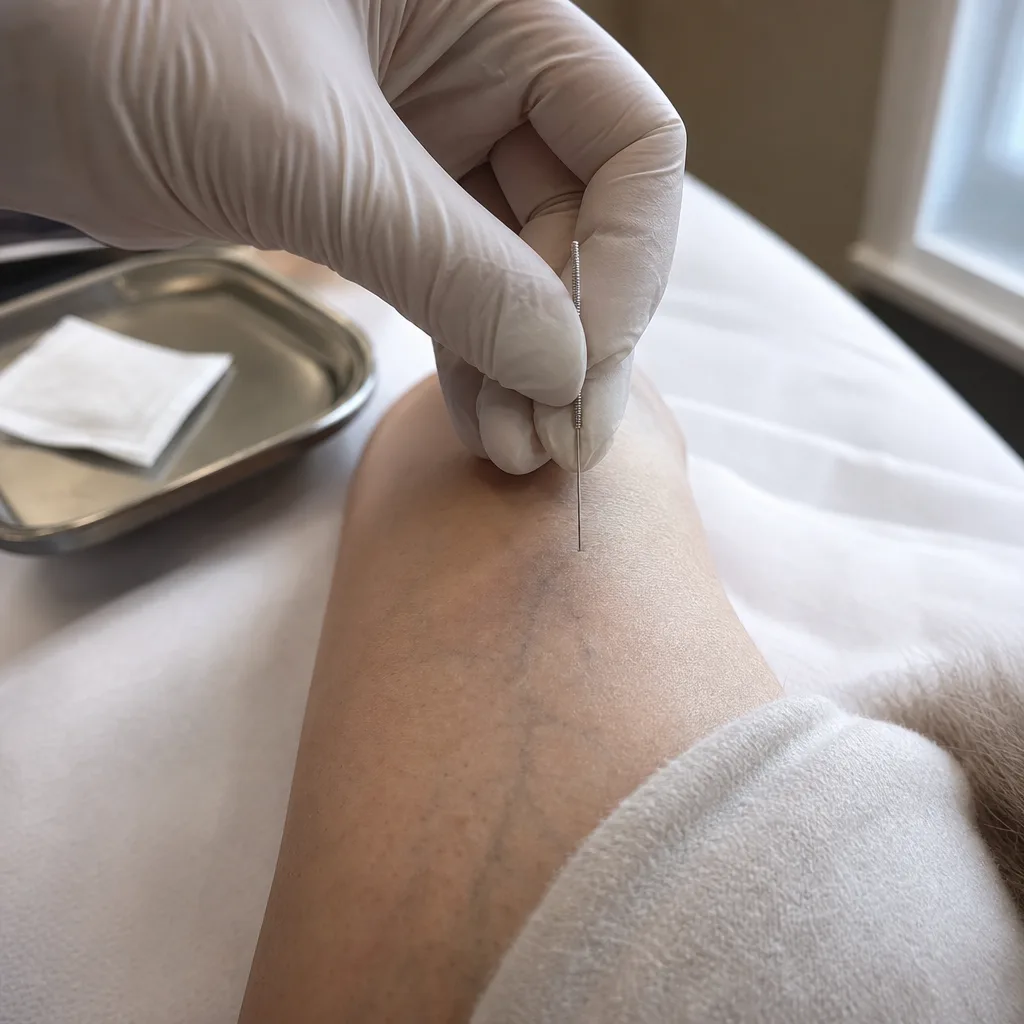
Next is the rest, and it surprises a lot of people. The needles stay in for a while as you lie still in a quiet room. Plenty of people doze off. If you've been running on empty, lying there with no phone, no kids calling, and no to-do list may be the hardest part and the best part.
Afterward, some people feel loose, calm, or sleepy. Others don't notice much the first time, and that's normal. A small bruise or a sore spot where a needle went in can happen. If you can, try not to rush from your session straight into a big meeting or a hectic school pickup. Give the calm feeling a little room.
- How long does a first visit take, and what does the intake cover?
- What should I wear? Sleeves and pant legs that roll up easily help.
- Should I eat before I come in?
- Who does acupuncture, and what training do they have?
- Are the needles sterile and used only once?
- How many visits do people usually try before deciding if it's helping?
- I'm pregnant or nursing. Does that change anything?
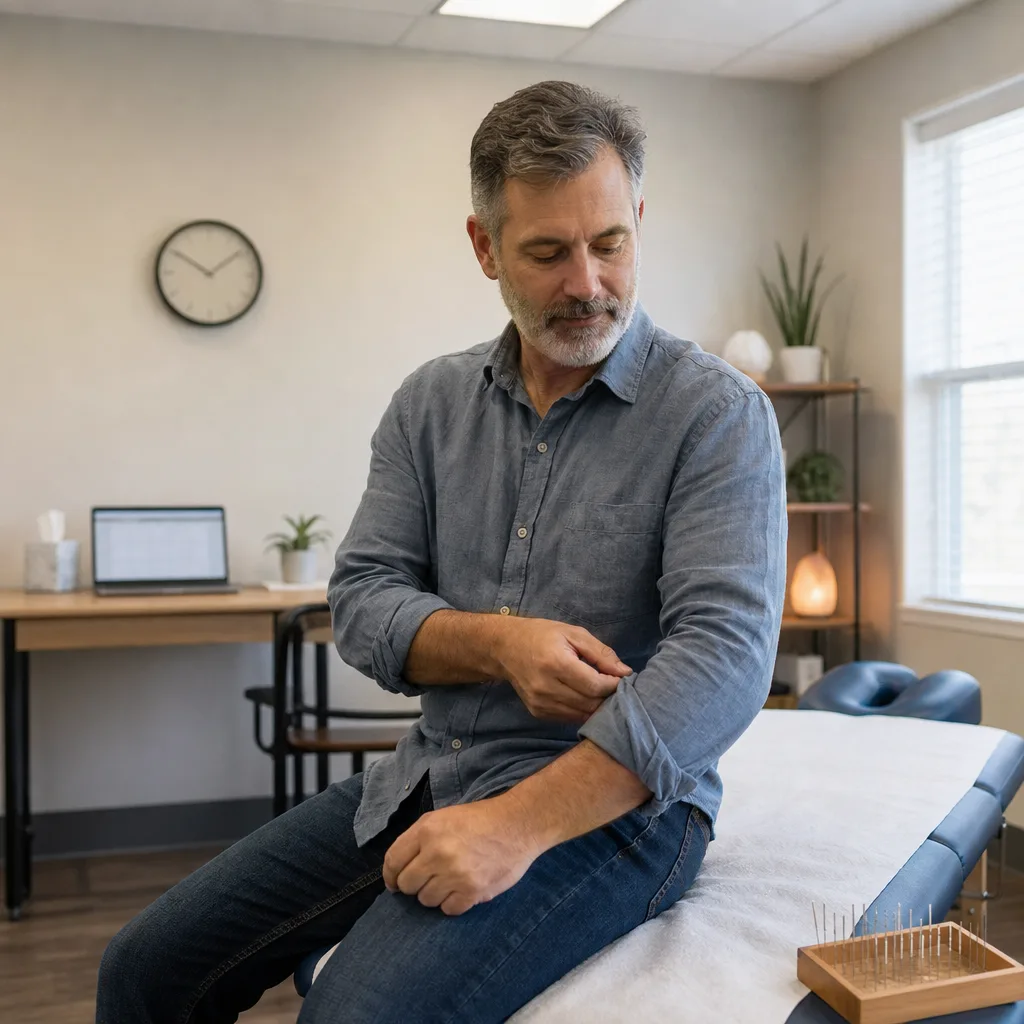
These are all fair questions to ask when you call us. A good provider will be glad to answer them.
Once you're on the table, speak up anytime. You can ask to have a needle taken out, change position, or stop the session. If you're scared of needles, say so at the start. A session for stress should feel calm, not like something you grit your teeth through.
Think of your first visit as a test run. You're not signing up to fix your anxiety in one hour. You're finding out whether this quiet, hands-on time is something your body responds to, and whether it's worth making it a steady part of your week alongside the rest of your care.
How Many Sessions Before You Notice a Difference
Some people feel calmer after the first visit. For most, though, the change builds slowly over a short series of regular sessions, not in one visit. That's why it helps to treat acupuncture as a steady habit for a few weeks before you decide whether it's working for you.
Many acupuncturists suggest coming in close together at the start, often about once a week. Then, if you're doing better, they space visits out. A plan should fit your stress, your schedule, and your budget. It's fair to ask any provider why they're suggesting a certain number of visits and what they expect you to notice along the way.
The first signs are often small, and they show up in your body before your mind catches up. Watch for things like these:
- You fall asleep a little faster, or you wake up less often at night.
- Your jaw, neck, or shoulders feel less tight in the morning.
- Little things don't set you off quite as fast as they used to.
- You have fewer stress headaches or stomach upsets in a week.
- You bounce back faster after a hard day.
These changes are easy to miss when life is busy. A simple log makes them easier to spot. Each night, rate your stress from 1 to 10 and jot down how you slept. Note anything big that happened that day, like a sick kid or a deadline. After a few weeks, look back. You're not hunting for perfect days. You're looking for a trend that's heading the right way.
Be honest with yourself if nothing is changing. If you've given it a fair run of regular visits and your sleep, tension, and mood are about the same, acupuncture may not be the right tool for you right now. That's useful to know, not a failure. If things are getting worse, use the check-in signs from the section above and talk to your doctor or therapist.
Cost matters too, since a series adds up. Acupuncture is usually priced per visit, and a first visit may cost more because the intake takes longer. Some practices offer packages for several visits. Insurance coverage for acupuncture varies a lot by plan, and some plans only cover it for pain, not for stress. HSA or FSA funds may help. Before you start, it's worth asking a few questions:
- What does a first visit cost, and what do follow-up visits cost?
- How many visits do you suggest before we check how it's going?
- Will my insurance cover any of it, and do I need a referral?
- If I buy a package and stop early, what happens to the unused visits?
Clear answers up front mean you can try acupuncture without money stress piling on top of the stress you came in to ease.
Try an acupuncture service today in Leesburg.Acupuncture as Part of a Broader Care Plan
Acupuncture works best when it's one part of a plan, not the whole plan. Think of it like a chair with several legs. Your doctor, your therapist, your sleep, how you move, and what you eat are the other legs. Acupuncture can help steady the chair, but it can't hold you up by itself.
That's not a weakness. It's why acupuncture is easy to add to your life. It doesn't ask you to drop anything that's already helping. It gives you a quiet, regular break that can make the rest of your plan easier to stick with.
Here's how the pieces can fit together:
- Therapy gives you tools for the thoughts behind your stress. Acupuncture gives your body a break from the tension those thoughts create.
- Medication can keep things steady. Acupuncture can sit alongside it, as long as the doctor who prescribes it knows.
- Sleep often gets a little easier when your body isn't stuck on high alert. Good sleep then makes everything else feel more doable.
- Movement, like a walk after dinner, helps burn off stress between visits.
- Food matters too. Skipped meals and too much caffeine can make you feel jittery, and that can feel a lot like anxiety.
The key is that everyone on your team knows what the others are doing. Tell your acupuncturist about any therapy, medicines, or supplements you use. Tell your doctor and therapist you're trying acupuncture. Bring up any herbs or supplements with your prescriber first, as we noted above. When everyone has the full picture, nobody is working against anyone else.
According to the National Health Service, stress also likes to settle in one spot.[2] For a lot of people, it shows up as a stiff neck, tension headaches, or a sore back from carrying a baby or a car seat all day. If that's you, other care can sit next to acupuncture in your plan. We offer chiropractic adjustment, neck pain treatment, and headache and migraine relief at our Leesburg office. Each one has its own page if you'd like to learn more.
We also offer a few other services that some people add to a stress plan:
- Cupping therapy, another hands-on option from traditional Chinese medicine.
- A traditional Chinese medicine consultation, if you want a wider look at your health through that lens.
- Nutritional counseling, if what and when you eat seems tied to how wound up you feel.
- A holistic health consultation, if you want help looking at the big picture of your sleep, stress, and habits.
You don't need all of these. Most people do better starting with one or two things and adding more only if it makes sense. A plan that fits your real week, with kids, work, and everything else, beats a perfect plan you can't keep up.
Our practice focuses on care for moms, babies, and families. We know stress doesn't happen apart from the rest of your life. Our goal is to help you find care that fits around it.
Frequently Asked Questions
Common questions from Leesburg patients about stress and anxiety acupuncture.
Does acupuncture for stress hurt?
No, most people feel only a tiny tap or pinch, not real pain. Acupuncture needles are much thinner than the ones used for shots or blood draws. After that first tap, you may feel a dull, heavy, or tingly feeling, or nothing at all. If you're nervous about needles, tell us before your session starts so we can go slower and check in with you.
Can I keep seeing my therapist or taking my medication while I do acupuncture?
Yes, acupuncture is meant to sit alongside the care you already have, not replace it. It works best as one steady part of a bigger plan that includes your doctor, therapist, sleep, and daily habits. Just make sure everyone on your care team, including the doctor who prescribes any medication, knows you're adding acupuncture.
What if I don't feel any different after my first session?
That's normal, so don't judge it after just one visit. For most people, change builds slowly over a short series of regular sessions, often weekly at first. Keep a simple nightly log of your stress level and sleep for a few weeks, then look back for a trend instead of expecting one dramatic shift.
Do I need to undress for a stress acupuncture session?
Usually not, since points for stress are often placed on the arms, lower legs, hands, feet, or ears. Wearing sleeves and pant legs that roll up easily makes it simple for us to reach those spots without you needing to change clothes.