
Herniated Disc Treatment in Leesburg, VA
Conservative, hands-on care for the leg-traveling pain, numbness, and weakness a disc problem causes — with honest guidance on when to skip us for the ER.
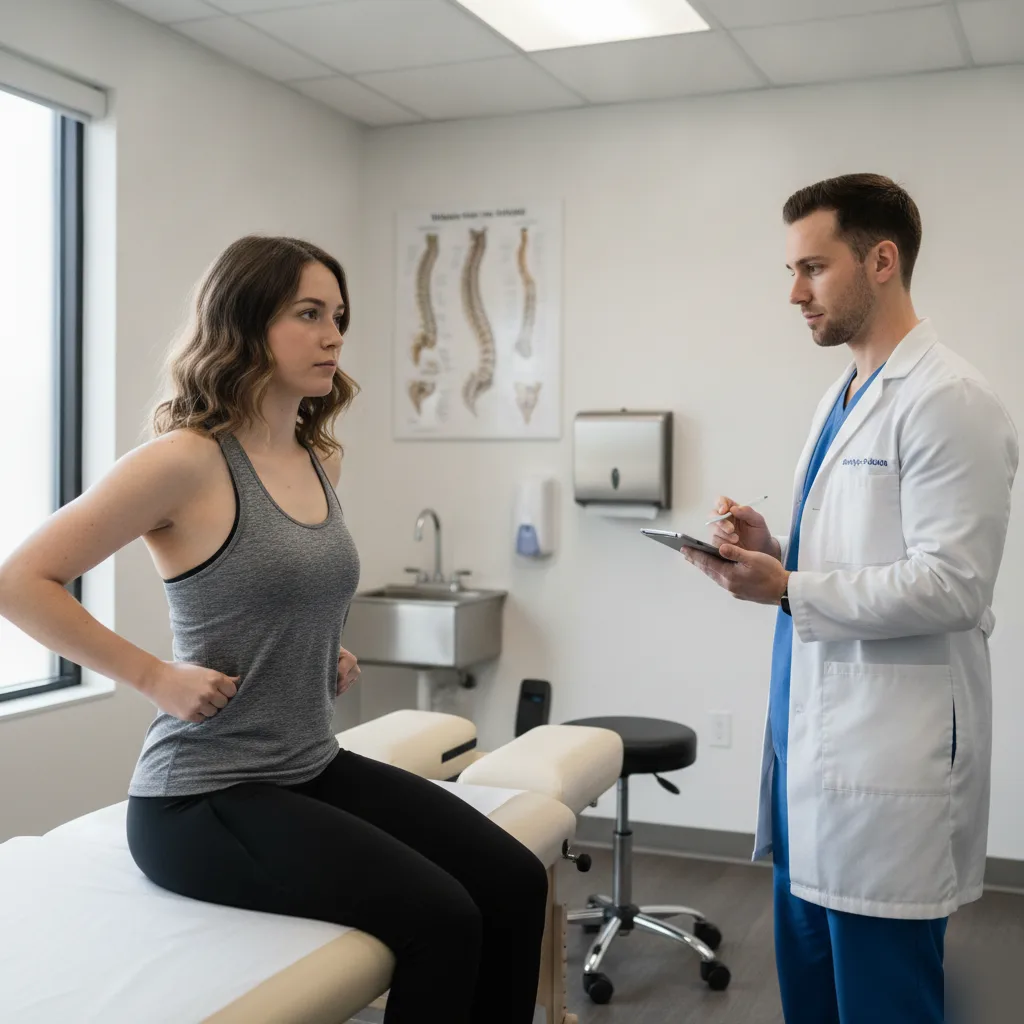
Signs a Herniated Disc Is Causing Your Pain
A herniated disc usually feels different from a pulled muscle. Pain that runs down your leg or arm, numbness, tingling, or weakness on one side are the classic red flags. If sitting makes it worse and standing helps, that's a big clue too.
Here's the thing about a herniated disc, it rarely stays put in one spot. Most muscle strains ache right where you strained them. A disc problem likes to travel. You'll feel it in your lower back, sure, but then it runs down through your hip, your thigh, sometimes all the way to your foot. That's the disc pressing on a nerve, not just tired muscle.
Numbness and tingling are the other big signals, so is weakness, like your leg suddenly feels like it might give out on a set of stairs. We hear this a lot from patients who commute along Route 15 or sit through the long Metro drive out to the District. Sitting is one of the worst positions for a herniated disc because it loads the disc more than standing does.
Not sure if this is what you're dealing with? That's common. Many people come in describing it as 'a pulled muscle that just won't quit.' A pull usually settles down in a week or two. A disc issue tends to linger, or it gets worse when you cough, sneeze, or bend forward to tie your shoes.
One more pattern we watch for: pain that's worse in the morning and eases a bit once you move around, then flares again after sitting too long. If that sounds like you, it's worth getting looked at rather than waiting it out.
Why Pregnancy and New Parenting Add Extra Strain on Your Spine
Here's something we tell new moms all the time: your spine doesn't just carry extra weight during pregnancy, it shifts its whole center of gravity. As your belly grows, your lower back curves forward more to compensate. That curve puts extra pressure right where herniated discs like to form, in the lumbar spine.
Your body releases a hormone called relaxin during pregnancy. It loosens the ligaments around your pelvis to prepare for birth, but it loosens spinal ligaments too. Looser support, more strain on the discs themselves, the exact combination that leads to bulging or herniated discs in expecting moms.
Then the baby arrives, and the strain doesn't stop. Most new parents hurt their backs from something small and repetitive, not one big injury. Think about it. You're bent over a crib fifty times a day, lifting a car seat with one arm, nursing hunched forward for hours at a stretch. None of that looks dangerous at the moment.
We see this often in Leesburg: a mom comes in six weeks postpartum saying her back pain got worse after birth, not better. That's common, and it's fixable with the right approach.
- Carrying a baby or toddler on one hip, which twists the lower spine unevenly
- Nursing or bottle feeding in the same slouched position for long stretches
- Bending at the waist instead of the knees to lift a crib mattress or car seat
- Sleep positions changing fast as your belly grows, adding new pressure points
When a Herniated Disc Needs Emergency Care, Not a Chiropractor
Most herniated discs often are not emergencies, but some are, and you need to know the difference before you book anything with us or anyone else.
If you lose control of your bladder or bowels, that's not a chiropractic case. According to the Cleveland Clinic, that's a condition called cauda equina syndrome, and it needs an ER visit right away.[1] Same goes for numbness spreading across both legs or the inner thighs, sudden weakness where your leg just gives out, or pain so severe you can't move at all. We've had folks call us describing these symptoms, and every time we tell them the same thing: go to the emergency room first.
- Loss of bladder or bowel control
- Numbness in the groin or inner thighs (saddle numbness)
- Sudden weakness in one or both legs
- Fever along with severe back pain
- Pain following a major trauma like a car crash or a fall from height
That last one deserves a note. If you were in a car accident, some of these symptoms can show up later, not right away. Adrenaline hides a lot in the first few hours.
None of this means a herniated disc diagnosis by itself is scary. It's not. Most people with disc issues have pain, maybe some tingling down a leg, and it's manageable. But red flag symptoms are different, and no chiropractor, no matter how good, should be your first call when they show up. Get checked by a doctor or the ER. Once you're cleared and the emergency piece is ruled out, that's when ongoing care for the disc itself becomes worth talking about.
What Conservative Herniated Disc Care Involves
So what does treatment look like once you're on the table?
We start with a hands-on exam, checking which movements bring on the pain and which ones ease it. That tells us where the disc is irritated and how the nerve is reacting. From there, care usually blends a few pieces.
- Chiropractic adjustment to restore movement in the joints above and below the affected disc, taking pressure off the area
- Spinal decompression to gently create space between vertebrae, which can reduce the pull on a bulging or herniated disc
- Roller table therapy to loosen tight muscles around the spine before adjustments, so the area isn't fighting back
- Home exercises and posture cues you use at your desk or in the car, not just in the clinic
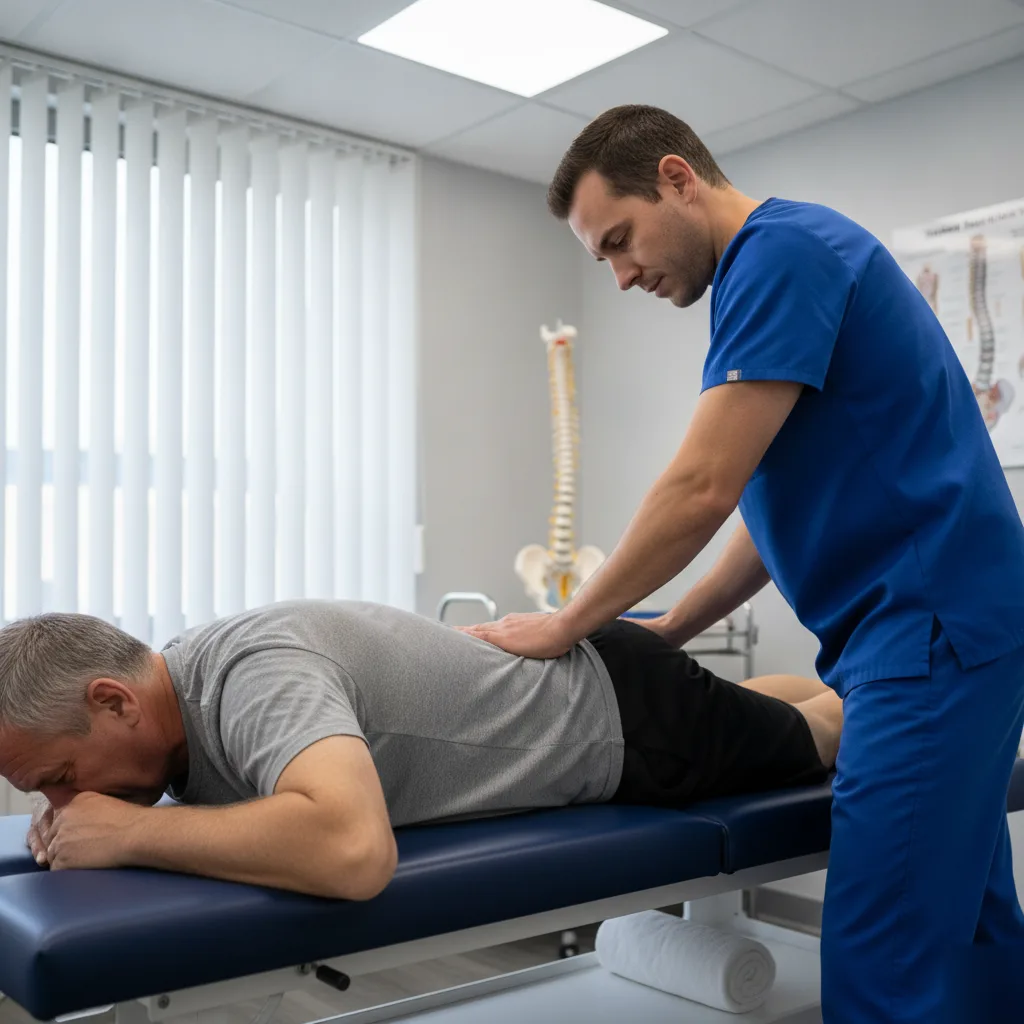
The plan often changes as you improve. Someone who can barely bend to tie their shoes in week one is often reaching lower and moving easier by week four or five. We track that, we don't guess at it.
None of this is a quick fix in one visit. Disc tissue heals slowly, and the nerve around it calms down on its own timeline. But steady, conservative care gives that process the best shot, without rushing toward surgery before your body's had a chance to respond.
Herniated disc recovery plan customized for you.How Recovery Progresses After Starting Care
Nobody heals a disc in one visit. We wish it worked that way, but it doesn't.
Here's what happens. The first couple of visits are usually about calming things down. The nerve is angry and inflamed, so early adjustments and roller table therapy focus on reducing that irritation before we push for bigger changes. Most patients notice less sharp pain within the first two to three weeks. That's not the disc healing yet, that's your body finally getting a break from constant nerve pressure.
Once the acute pain settles, we shift toward rebuilding movement and stability. This is where spinal decompression and ongoing chiropractic adjustment work together, decompression creates space around the disc, adjustments keep the spine moving the way it's supposed to.
So how long does the whole process take? It depends on how long you've had the problem and how your body responds, but many patients settle into a rhythm of noticeable improvement over several weeks to a couple months.
- Weeks 1-2: less sharp or shooting pain, better sleep
- Weeks 3-5: more comfortable sitting and standing for longer stretches
- Weeks 6-8: improved bending, lifting, and daily movement without guarding
- Beyond that: spacing out visits as your spine holds its progress
We check progress at every visit, not just by asking how you feel but by watching how you move. If something isn't tracking the way it should, we adjust the plan. That's the honest part of this work, some weeks are better than others, and we tell you when that's normal.
Frequently Asked Questions
Common questions from Leesburg patients about herniated disc treatment.
How do I know if my back pain is a herniated disc or just a pulled muscle?
A herniated disc usually travels, while a pulled muscle stays in one spot. You might feel pain in your lower back that runs down into your hip, thigh, or even your foot. Numbness, tingling, or a leg that feels weak on stairs are other red flags. A muscle strain typically settles in a week or two, but disc pain lingers or gets worse when you cough, sneeze, or bend to tie your shoes.
Why does sitting through a long commute on Route 15 make my back worse?
Sitting loads the disc more than standing does, so a long drive on Route 15 or a Metro commute into the District can flare things up fast. Many Leesburg patients tell us their pain gets worse after sitting still and eases once they stand and move around. If you notice that pattern, it's a strong sign the disc itself is involved, not just tired muscles.
Can pregnancy or caring for a newborn cause a herniated disc?
Yes, pregnancy and new parenting both add real strain to your spine. Your growing belly shifts your center of gravity forward, and a hormone called relaxin loosens spinal ligaments along with pelvic ones. After birth, repetitive moves like lifting a car seat or bending over a crib add up. We see moms in Leesburg around six weeks postpartum whose back pain got worse, not better, and it's a common, fixable pattern.
When should I go to the ER instead of booking a chiropractic visit?
Go to the ER if you lose bladder or bowel control, feel numbness in your groin or inner thighs, or have sudden weakness in one or both legs. Fever with severe back pain, or pain after a car crash or a fall, also needs emergency care first. These are signs of a rare but serious condition called cauda equina syndrome. Once you're cleared by a doctor, that's when ongoing disc care becomes worth discussing.
What does treatment involve once I start care for a herniated disc?
Care usually blends a few tools rather than one fix. We start with a hands-on exam to see which movements trigger your pain. From there, treatment often combines chiropractic adjustments, spinal decompression to create space between vertebrae, and roller table therapy to loosen tight muscles first. We also give you home exercises and posture cues for your desk or car. Most people move easier by week four or five, not after one visit.
How long does it take to feel real relief from a herniated disc?
Disc tissue heals slowly, so plan on weeks, not days. Someone who can barely bend to tie their shoes in week one is often reaching lower and moving easier by week four or five. We track your progress visit to visit and adjust the plan as your body responds, rather than guessing. Sticking with the full plan, including home exercises, makes a real difference in how fast you recover.