
Personal Injury Chiropractic in Leesburg, VA
Feeling fine right after an accident doesn't always mean you weren't hurt. Learn when to get checked, why timing matters, and what a good evaluation and treatment plan involves.
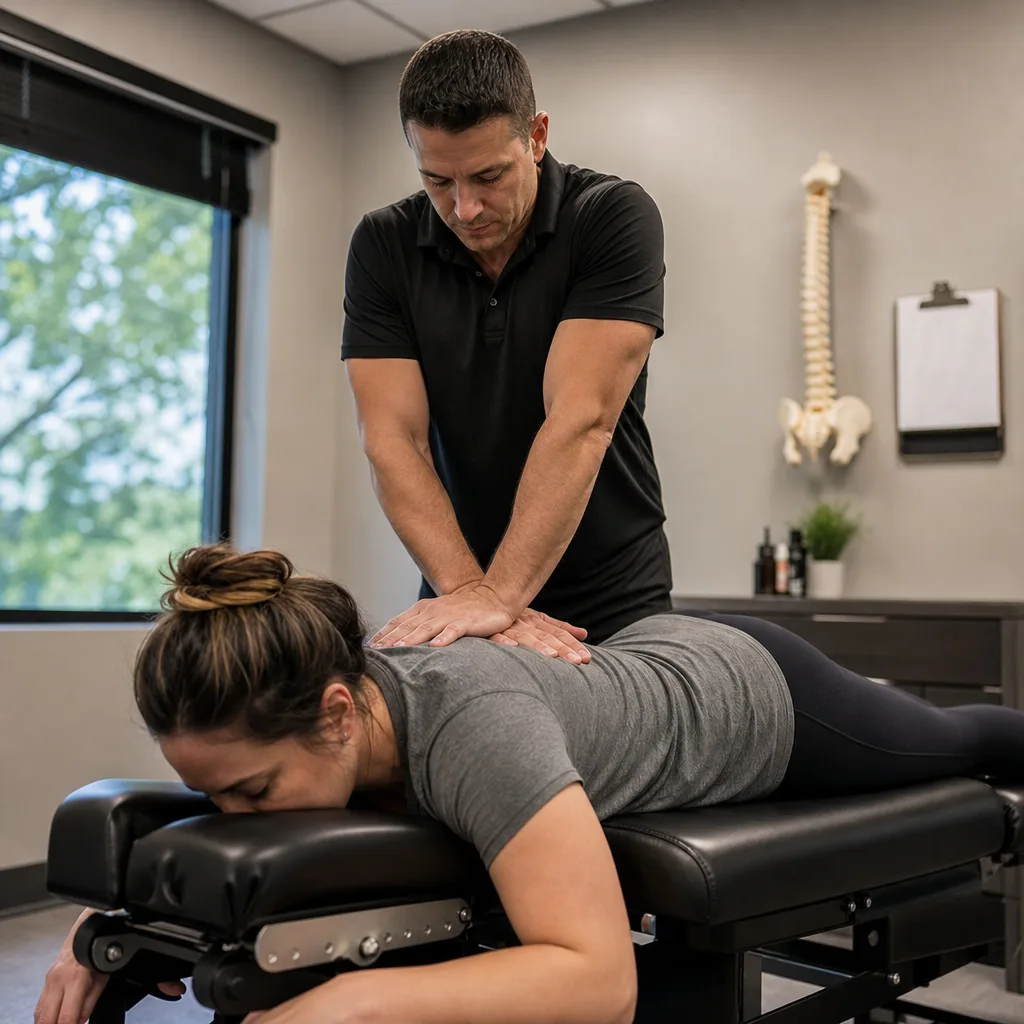
Deciding Whether You Need Care After an Accident
Feeling fine right after an accident doesn't always mean you weren't hurt, because soreness and stiffness often show up days later. If you notice new pain, stiffness, or headaches, an exam is worth it. If you were badly hurt, get emergency care first, and if you truly have no symptoms after a few weeks, you may not need care at all.
Here's the tricky part about accidents. Right after a crash or a fall, your body is full of adrenaline. You might walk away, swap insurance info, and drive home feeling okay. Then a day or two later, you wake up and can't turn your head to check your blind spot. That delay is common, and it's why a lot of people wonder if they should have gotten checked sooner.
So how do you know if your aches are worth a visit? Pay attention to what changes in the days after. These are good reasons to get an exam:
- Neck or back stiffness that wasn't there before the accident
- Headaches that started after the crash or keep coming back
- Pain that spreads into your shoulders, arms, hips, or legs
- Trouble sleeping because you can't get comfortable
- Everyday things like lifting your kids, sitting at your desk, or looking over your shoulder now hurt
None of these mean something terrible is wrong. They do mean your body is telling you something has changed. A low-speed fender bender can still jolt your neck, and a slip on an icy step can still throw off your lower back. The size of the accident doesn't always match the size of the injury.
We offer whiplash treatment, neck pain treatment, back pain treatment, and headache and migraine relief. If your symptoms fit any of those, an exam can help sort out what's going on and what kind of care makes sense.
Now for the honest part. Chiropractic care isn't always the right first step. If you were hurt badly enough that you needed an ambulance, or if something feels seriously wrong, go to the emergency room or see a medical doctor first. You want serious injuries ruled out before anyone works on your spine. Chiropractic care can come later, once you've been cleared.
And sometimes you don't need care at all. If a few weeks have passed and you've had no pain, no stiffness, and no headaches, and you're moving the way you always have, you may be just fine. There's no reason to book visits for an injury you don't have. Keep an eye on how you feel, and if something new shows up later, you can come in then.
If you're stuck in the middle, with mild soreness that isn't going away but isn't getting worse either, that's often the best time to get checked. Small problems are easier to work with before they settle in and start changing how you move, sit, and sleep. Waiting to see if it fades is a fair choice for a few days. Waiting months while it quietly gets worse usually isn't.
Think of it this way. If you're asking the question, it's worth getting a clear answer from someone who can look at how your body is moving.
Discover chiropractic care near Village Market Blvd.Why Timing Matters Under Virginia Law
Timing matters after an accident for two reasons. One is your body. The other is your paper trail. If you might file an injury claim or deal with an insurance company, when you first got checked can matter almost as much as what was found.
Here's why. When an adjuster looks at an injury claim, one of the first things they check is the gap between the accident and your first visit to a provider. Say you were in a crash in early March and didn't see anyone until May. The adjuster may ask a fair question: how do we know this pain came from the accident and not from something that happened in between? A short gap makes that link easier to show. A long gap gives them room to doubt it.
This doesn't mean you need to rush in the same afternoon. As we covered above, pain often shows up days later, and that's normal. It means that once you notice symptoms, it's smart not to sit on them for weeks.
Virginia also sets a firm deadline for filing a personal injury claim. Once that window closes, you can lose the right to file at all, no matter how real your injury is. Virginia's rules about fault are also known for being strict. We're chiropractors, not lawyers, so we won't tell you what your deadline is or how fault applies to your case. If you're thinking about a claim, talk with a Virginia attorney early so you know your exact dates.
What you can control is keeping a clear, honest record from the start. These simple steps help:
- Write down the date and time of the accident, plus where it happened.
- Keep a copy of the police or accident report if there is one.
- Jot down when each symptom starts, like the first morning your neck felt stiff or the first headache.
- Tell every provider you see that your pain started after an accident. Keep the story the same each time.
- Keep your appointments. Skipped visits and long breaks in care can look like you got better, even when you didn't.
- Save receipts, appointment dates, and notes about missed work or things you couldn't do.
Picture two people hurt in the same fender bender in Leesburg. One gets checked a few days after her neck starts aching, keeps her visits, and writes down how she feels each week. The other waits two months, hoping it fades, then comes in when it's worse. Both are in real pain. But the first person has a clear line from the accident to her care, and the second has a gap someone else gets to explain.
Getting checked early also helps your recovery. Small problems are easier to work with before they change how you sit, sleep, and move. So the step that protects your health is usually the same step that protects your record. That's why we'd rather see you while things are still fresh than after months of waiting.
What an Evaluation and Treatment Plan Involves
A good evaluation after an accident does two jobs at once. It figures out what's going on in your body, and it puts that on paper in a way that clearly ties your care back to the accident. That's the same idea from earlier in this page: the step that helps you heal is the same step that protects your record.
Whoever you see, a thorough first evaluation should cover a few basics:
- Your story. What happened, how you were sitting or standing, and where you felt the hit or the twist.
- When each symptom started. This is where the notes you jotted down after the accident pay off.
- Your health before the accident. Old injuries matter, because they help show what's new and what isn't.
- How you move now. Turning your head, bending, reaching, and anything that's suddenly hard.
- What you can't do anymore. Lifting your toddler, sleeping through the night, or getting through a workday at your desk.
If anything during the evaluation points to a problem that needs a medical doctor or imaging first, a careful provider should tell you that plainly and send you there before treatment starts.
From there, you should get a treatment plan that's built for you, not a one-size package. Every treatment plan we create is customized to the patient's own needs and goals. For you, those goals might be as simple as checking your blind spot without wincing, or holding your baby without your back seizing up.
Depending on what's found, care may include a few different tools. We offer chiropractic adjustment, spinal decompression, roller table therapy, and whiplash treatment, along with acupuncture and cupping therapy for people who want them. Each of these has its own page with more detail. The point here is that your plan should match your injury. It shouldn't match a template.
A useful plan also answers a few questions up front, and you should feel free to ask them:
- What do you think is causing my pain?
- What are we trying to fix, and how will we know it's working?
- About how often I will need to come in, and for how long?
- When will you re-check my progress?
- What should I do, or avoid, at home between visits?
Those re-checks matter more than people think. They show whether you're getting better, and they add to the clear, steady record that an adjuster or attorney may want to see later. Notes that track your progress week by week tell a much stronger story than a single visit followed by silence.
You should never feel lost about your own care. Our team values transparent communication, so you'll know what we found, what we recommend, and why. Our practice is led by two experienced female doctors with a gentle, hands-on approach. That matters when you're sore, nervous, and not sure how much your neck or back can handle right now.
Treating Whiplash and Auto Injuries Specifically
Whiplash is the most common injury people mean when they talk about a car accident, and it's different from a typical stiff neck. In a crash, your head snaps one way and then the other in a split second, faster than your muscles can brace. That quick back-and-forth can strain the muscles, ligaments, and small joints in your neck and upper back. It can happen in a rear-end bump at a stoplight just as easily as in a bigger crash.
Here's what makes it tricky. A lot of whiplash damage is in soft tissue, and according to the Mayo Clinic, soft tissue often doesn't show up on a standard X-ray.[1] So you can feel real pain and still hear that your images look normal. That doesn't mean nothing's wrong. It means the injury has to be found and tracked another way, through how you move, where it hurts, and what you can't do anymore.
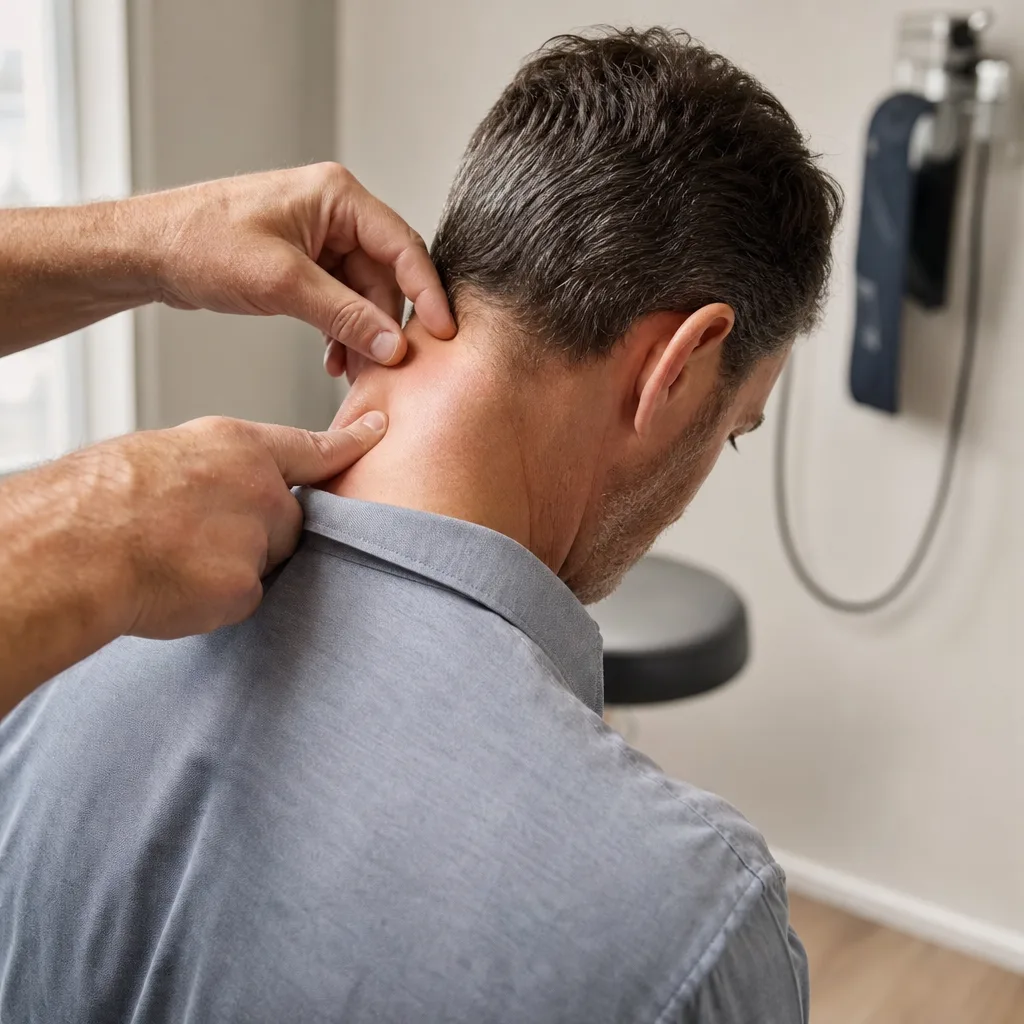
Auto injuries also tend to show up in more than one place. The seat belt holds your chest and hips while the rest of you keeps moving, so the strain can travel. Along with neck pain, people often notice:
- Headaches that start at the base of the skull
- Tight, aching shoulders or upper back
- Lower back or hip pain from the jolt through the seat
- Tingling or pain that runs down an arm or leg
- Dizziness or trouble focusing in the days after the crash
Because the injury follows the way the crash moved your body, care should too. Someone hit from behind usually needs different care than someone hit from the side. Someone whose back took the jolt needs different care than someone whose neck did. That's why we offer whiplash treatment and auto injury chiropractic care as their own services, not as a general back pain visit with a new name. Depending on what's going on, your plan might also draw on chiropractic adjustment, spinal decompression, herniated disc treatment, or headache and migraine relief, each with its own page for more detail.
A gentle approach matters here, too. A freshly injured neck is sore and guarded, and many people are nervous about anyone touching it. Our doctors use a gentle, hands-on approach, and care can be adjusted to what your body can handle right now. You shouldn't feel like you're being pushed through something that hurts.
This is also where the record we talked about earlier really earns its keep. Since whiplash often doesn't show on an X-ray, steady notes about your range of motion, your pain, and your progress become the clearest proof that your injury is real and came from the crash. The same visits that help your neck heal also build that picture, week by week. You don't have to choose between getting better and protecting your claim. Doing one well usually takes care of the other.
If you were in a car accident and your neck, back, or head hasn't felt right since, it's worth finding out what's going on. Our practice in Leesburg, on Village Market Blvd SE, holds a 5.0 average rating from over 150 patient reviews, and we'll explain what we find in plain language.
Whiplash treatment in Leesburg.Care for Parents and Children After an Accident
When a family is in an accident, the parent driving usually checks everyone else first and themselves last. Then life keeps going. There are car seats to buckle, toddlers to carry, and babies to rock at 2 a.m. That's hard on a neck or back that just took a jolt. Care after an accident should fit the life you're living, not just the injury on paper.
If you were pregnant during the accident, your OB or midwife should hear about it, even if you feel fine. Your body is already changing, so a crash adds strain on top of that. Once you've been cleared, care can be planned around your pregnancy. We offer prenatal chiropractic care and the Webster technique, each with its own page for more detail.
Kids are harder to read. A baby can't always tell you their neck hurts, and a young child may not have the words for it. Your child's pediatrician should be the first stop after any crash. In the days after that, watch for changes like these:
- Fussing when you pick them up or lay them down
- Favoring one side, or not wanting to turn their head
- Sleeping more poorly than usual
- Complaining of headaches or a sore neck or back
- Getting upset about riding in the car seat again
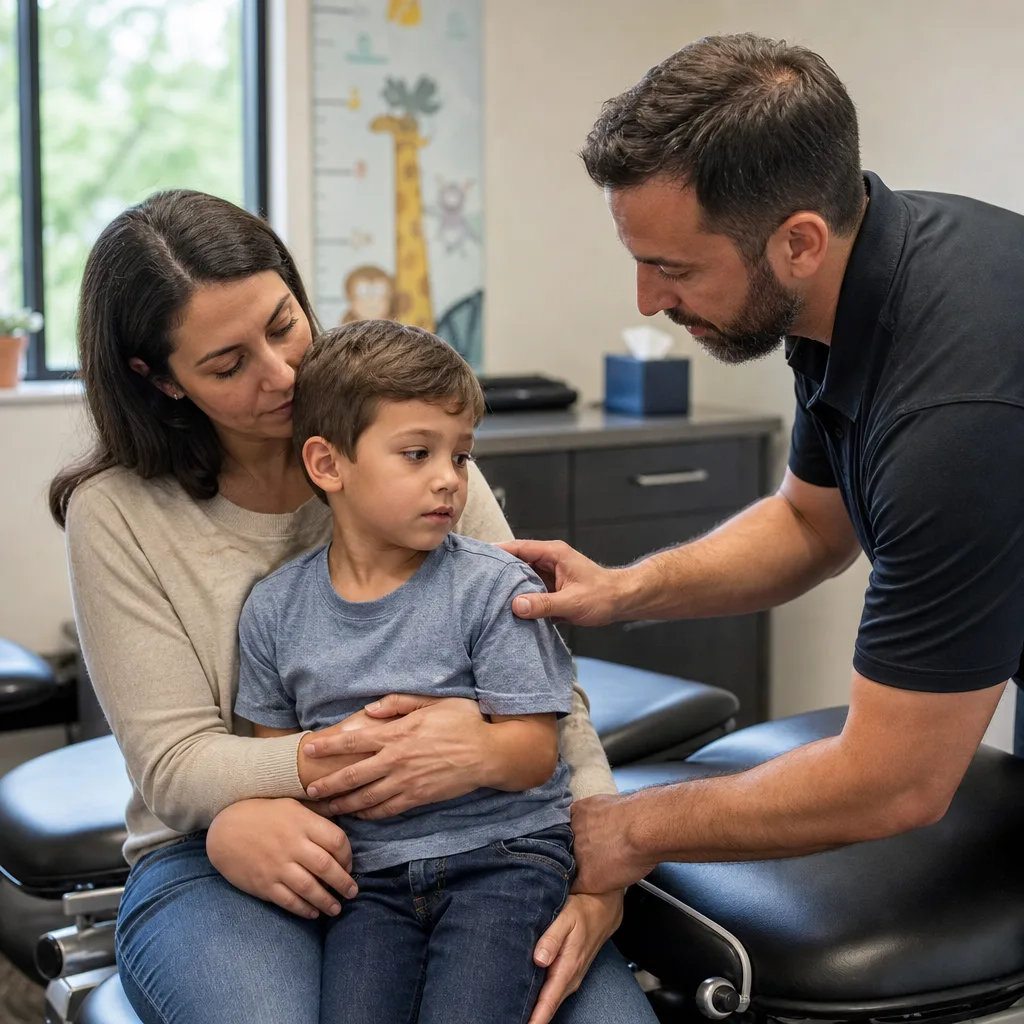
None of these prove an injury. But they're worth mentioning to your child's doctor and to anyone who checks your child afterward. We offer pediatric chiropractic care and infant chiropractic care, with a gentle approach made for small, growing bodies.
Parents also tend to skip their own care. You might tell yourself you'll deal with your back once the kids are settled. The trouble is that the daily lifting and carrying doesn't stop. Picture a mom who leans into the back seat to unbuckle a car seat every morning. If her lower back has been aching since a fender bender, that one motion keeps poking at it day after day. Your plan should account for the things you can't stop doing, and it should give you ways to do them with less strain.
This is where our practice is a natural fit. New Energy Chiropractic is a woman-owned clinic in Leesburg that focuses on moms, babies, and families. Our two experienced female doctors understand the challenges of pregnancy, postpartum recovery, and childhood development. They bring a gentle, hands-on approach to expecting mothers, newborns, and growing families. If more than one person in your family was in the car, you don't need to find a different provider for each of you.
Getting the whole family checked follows the same idea as the rest of this page. The care that helps each person heal also gives you a clear picture of how everyone was affected. You don't have to guess about your kids, and you don't have to put yourself last.
Frequently Asked Questions
Common questions from Leesburg patients about personal injury chiropractic care.
Will my health insurance or auto insurance cover the visits?
That depends on your policy, so it's worth a quick call to your insurance before your first visit. Auto accident injuries are sometimes covered under your car insurance's medical payments or the other driver's policy, separate from your regular health plan. Ask what documentation they need, since the notes and re-check visits from your treatment plan can support that claim.
Do I need a referral from a doctor to come in after an accident?
No, you don't need a referral to schedule an evaluation. If you were badly hurt or something feels seriously wrong, see an emergency room or medical doctor first so serious injuries get ruled out. Once you're cleared, or if your symptoms are mild stiffness or soreness, you can come straight in for a chiropractic evaluation.
What if I already saw a doctor or urgent care right after the accident?
That's a good first step, and you should keep going. Bring any notes, reports, or discharge paperwork from that visit with you. Telling us what was already found helps build on your record instead of starting over, and keeps your symptom timeline consistent across every provider you see.
Can I still get checked if the accident happened weeks ago?
Yes, you can still be seen even if some time has passed. It's better to come in once you notice stiffness, headaches, or pain than to keep waiting, since gaps in care can make it harder to connect your symptoms back to the accident. The sooner you're seen after noticing a change, the clearer that connection stays.