
Prenatal Chiropractic Care in Leesburg, VA
Pregnancy-safe adjustments for low back pain, hip pain, sciatica, and pelvic pressure — tailored to whatever trimester you're in.

Pregnancy Symptoms This Care Is Built to Address
Pregnancy changes your posture, ligaments, and center of gravity. Prenatal chiropractic care targets specific aches like low back pain, hip pain, sciatica, and pelvic pressure. We offer relief beyond just telling you to rest. Pregnancy asks a lot of your body, and it happens fast. Your center of gravity shifts. Your ligaments loosen to get ready for birth. Your spine carries weight it's never carried before. We see this every week in our office.
The pain shows up differently for every mom. Some feel it low in the back, others feel it deep in the hip. Here's what we hear most from expecting moms:
- Low back pain that gets worse the longer you stand or sit
- Hip pain that flares up at night and makes sleep hard
- Sciatica, that sharp nerve pain running down one leg
- Round ligament pain, a quick stabbing feeling on one side of the belly
- Pelvic pressure and pain, especially common in the third trimester
- Headaches tied to postural changes that come with a growing belly
None of this is just something you have to push through. Much of it comes down to alignment and how your pelvis is sitting as your body shifts week to week. That's where we start looking.
Deciding When to Start Care by Trimester
Most people think chiropractic care during pregnancy is a third-trimester thing. Something you do once your hips ache or you can't sleep. That's not true. The body starts changing the day you conceive. Your ligaments loosen, your center of gravity shifts, and your pelvis begins adjusting for a baby that isn't even showing yet. Starting prenatal chiropractic care early means we're working with those changes instead of chasing pain after it's already set in:
- First trimester: nausea, fatigue, and early hormonal shifts can throw off your nervous system. Gentle adjustments here support overall balance while your body adapts
- Second trimester: this is when the belly grows fast and posture starts to compensate. Low back and hip discomfort usually show up now
- Third trimester: your pelvis needs to be balanced for labor. This is when we often use the Webster technique to support proper baby positioning
So, which trimester is the right one to start? Any of them. We see moms come in at 10 weeks and moms come in at 34 weeks; both benefit. Waiting until you're miserable means we're playing catch-up. A mom who starts in her second trimester with mild hip tightness usually has an easier third trimester than one who waits until she can barely get off the couch.
Explore our chiropractic services to learn more about our treatment options and approach to wellness.When to Call Your OB Instead of a Chiropractor
Prenatal chiropractic care handles the aches, pressure, and misalignment that comes from carrying extra weight in a shifting body. It does not replace your OB. Moms come in for hip pain or sciatica, and that's exactly what we treat. But some symptoms need a phone call to your doctor first, not an adjustment table.
How do you know the difference? Ask yourself if what you're feeling is structural or medical. According to the American College of Obstetricians & Gynecologists a dull ache in the lower back after standing all day at work is structural. Sudden swelling in your face and hands, a pounding headache that won't quit, or blurry vision are not.[1] Are you experiencing any of these:
- Vaginal bleeding or fluid leaking at any point in pregnancy
- Severe or sudden abdominal pain, especially with cramping
- A noticeable drop in your baby's movement
- Signs of preeclampsia: bad headaches, vision changes, sudden swelling
- Contractions before 37 weeks
- Fever, chills, or you just feel something's seriously wrong
For any of those, call your OB or head to the hospital. Don't wait, and don't try to work it out with stretching or an adjustment. We'd rather you get checked and it be nothing than the other way around.
If you're already under care for a high-risk pregnancy, loop your OB in before starting chiropractic care. Most doctors are fine with it once they know what's involved. Good communication between your providers keeps everyone on the same page and keeps you safe.
How a Pregnancy-Adapted Adjustment Works
Most people don't know this until they're pregnant: a standard adjustment table just doesn't work once your belly grows. So the whole setup changes; table, position, pressure, all of it.
We use tables built with a drop-away belly piece, so you lie face down without any pressure on your stomach. No twisting onto your back and holding an awkward position for twenty minutes. Once you're settled, we check the pelvis first. Pregnancy loosens the ligaments around your sacrum and hips. That shift can throw everything out of balance. This is where Webster technique comes in. It's a specific method aimed at improving pelvic alignment and easing tension in the ligaments that support the uterus:
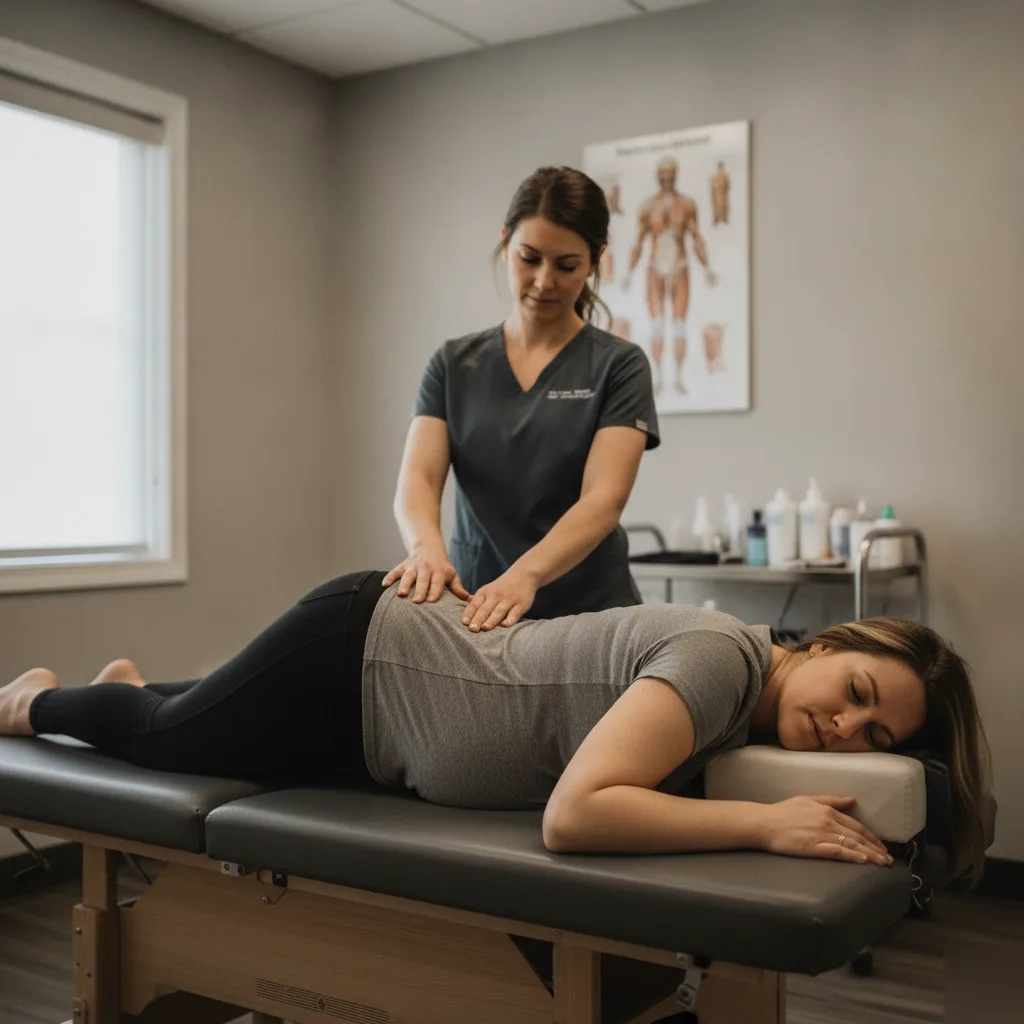
- We check how your pelvis and sacrum are sitting, since even a small tilt can affect comfort as the baby grows.
- Using light, hands-on pressure, we adjust the sacrum and hips; nothing forceful or twisting.
- We assess round ligament tension on each side, since one side is often tighter than the other.
- We finish by checking your low back and neck if you're carrying tension there too.

The discomfort traces back to the same one or two spots. The pressure we use is nowhere near what people expect. It's light, controlled, and specific to where your body needs it, not a generic routine run on every patient.
Our doctors keep up with ongoing training in this kind of care. The technique isn't guesswork. Curious what a first visit feels like? Most moms tell us it's more relief than anything else.
Choosing a Provider Trained for Pregnant Patients
Not every chiropractor works with pregnant patients the same way. Some skip it entirely. Others treat it like any other back pain visit, which it isn't. Your body is doing something different during pregnancy. Your ligaments are looser, your balance has shifted. Adjustments need to reflect that. Before you book, it's good to ask a few direct questions:
- Do you use a pregnancy-specific table or setup that avoids pressure on the belly?
- Are you trained in the Webster technique for pelvic alignment during pregnancy?
- How do you adjust your approach as I move through each trimester?
- What symptoms would make you refer me back to my OB or midwife?
A provider who can't answer these clearly probably hasn't worked with many pregnant patients. That's fine for them to admit, but it's not fine for you to guess.
Our team at New Energy Chiropractic is a woman-owned practice. Both doctors here have spent time working specifically with moms and babies. That's not a small detail. It changes how we listen, how we position you on the table, and how we explain what's happening in your body. We hold a 5.0 rating across more than 150 patient reviews. Many of those reviews come from moms who found us during pregnancy and stayed for care after the baby arrived.
Credentials matter, but so does comfort. If a provider rushes you, dismisses your questions, or can't explain why they're doing something, trust that feeling. You're allowed to ask around and compare before you commit to anyone.
See why we're different.Frequently Asked Questions
Common questions from expecting Leesburg moms before their first prenatal visit.
What should I expect during my first prenatal chiropractic visit in Leesburg?
Your first visit starts with checking how your pelvis and sacrum are sitting as your body changes. You'll lie face down on a table with a drop-away belly piece, so there's no pressure on your stomach. We use light, hands-on pressure to adjust your hips and sacrum, not forceful twisting. Many Leesburg moms tell us it feels like relief right away, not a rough treatment. We also check your low back and neck if you're holding tension there too.
When should I start prenatal chiropractic care?
Any trimester works, but starting early gives you an easier path. Your ligaments loosen and your center of gravity shifts from the day you conceive, long before your belly shows. First trimester care supports balance while your body adapts. The second trimester is when back and hip pain usually creeps in. Third trimester care often uses the Webster technique to support pelvic balance for labor. Moms who start before the pain gets bad usually have a smoother third trimester.
Is it safe to see a chiropractor during pregnancy, or should I call my OB first?
Prenatal chiropractic care is meant for structural aches, not medical emergencies. If you have vaginal bleeding, sudden swelling, bad headaches, vision changes, or a drop in your baby's movement, call your OB or go to the hospital first. Regular low back pain from standing all day or hip tightness at night is exactly what we treat. If you're in a high-risk pregnancy, loop your OB in before starting care so both providers stay on the same page.
How does a prenatal chiropractic adjustment work compared to a regular adjustment?
A prenatal adjustment uses a different table and much lighter pressure than a standard chiropractic visit. We use a table with a drop-away piece for your belly, so you never lie on your back or stomach the wrong way. We check your pelvis and sacrum first, since pregnancy loosens the ligaments that hold everything in place. The Webster technique is often used in the third trimester to ease tension around the uterus and support pelvic alignment for labor.
How soon will I feel relief from back or hip pain after starting care?
Many Leesburg moms notice less tightness after just one or two visits, though timing depends on how long the pain has built up. A mom who starts in her second trimester with mild hip discomfort often feels steady improvement fast, since we're catching the misalignment early. Someone who waits until the third trimester and can barely get off the couch may need a bit more time. Starting sooner instead of waiting until you're miserable makes the whole process easier.
Do I need to tell my OB before starting chiropractic care in Leesburg?
If your pregnancy is high-risk, yes, loop your OB in before your first visit. Most doctors are fine with prenatal chiropractic care once they understand it's gentle and targets alignment, not medical issues. For a typical low-risk pregnancy, you can start care and mention it at your next OB appointment. Good communication between your OB and your chiropractor keeps your care coordinated, especially as your body changes week to week through each trimester.